Category Archives: Body & Mind

30 Minutes in Your Local Park is Perfect


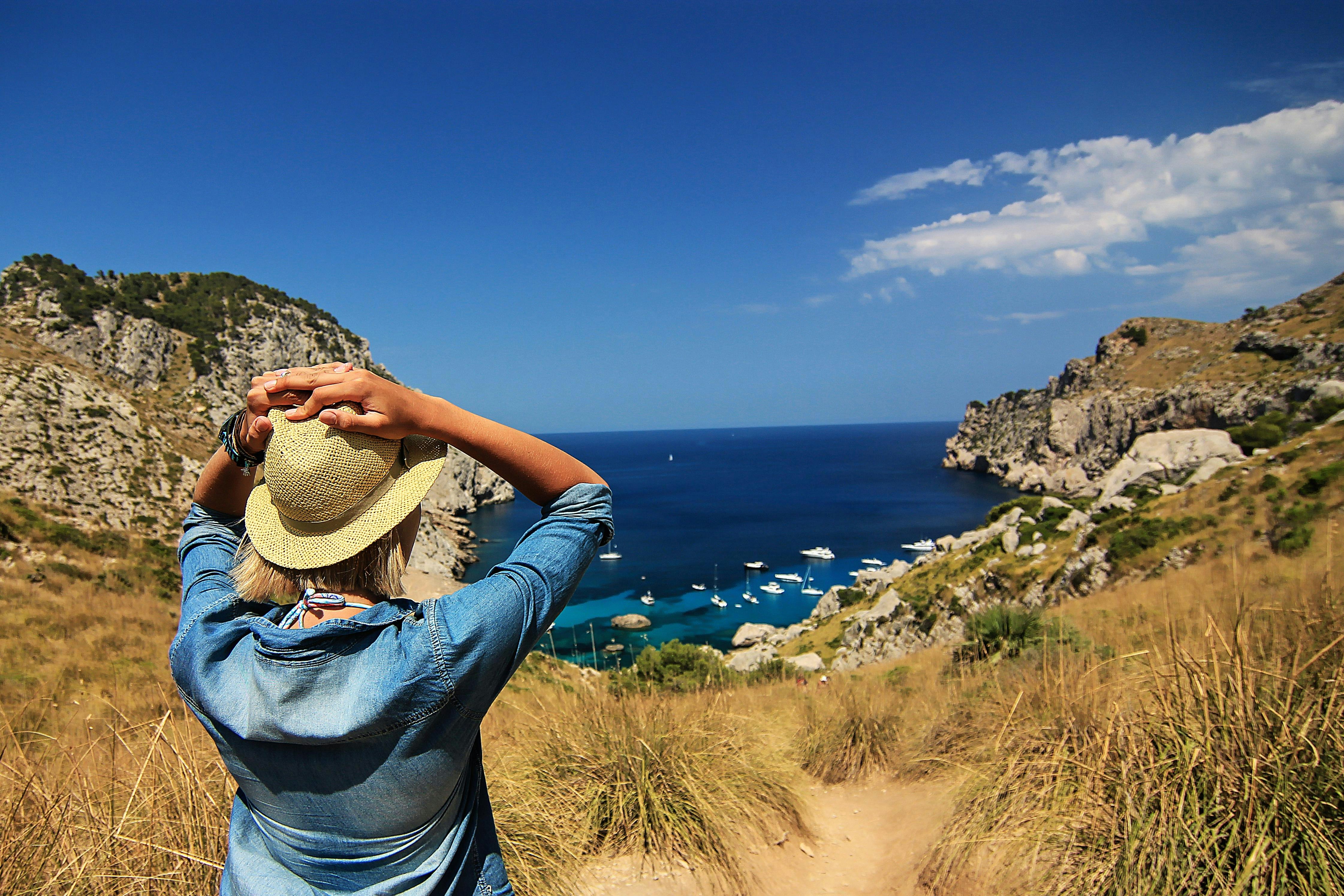
Urban parks are great and now some Aussie researchers have found another reason to create more of them: it’s really good for your health. We’ve known for years that spending time in nature is good for people but his research augments that knowledge with a timeframe. It takes only 30 minutes of being in an a park to see benefits to one’s health. Which means that you can get enough nature on your lunch break (you should get more though).
“If everyone visited their local parks for half an hour each week there would be seven per cent fewer cases of depression and nine percent fewer cases of high blood pressure,” she said.

“Given that the societal costs of depression alone in Australia are estimated at $A12.6 billion a year, savings to public health budgets across all health outcomes could be immense,” she said.

UQ CEED researcher Associate Professor Richard Fuller said the research could transform the way people viewed urban parks.

“We’ve known for a long time that visiting parks is good for our health, but we are now beginning to establish exactly how much time we need to spend in parks to gain these benefits,” he said.

Read more.

And over at Reddit a user posted a good summary on why nature is good for you:

It’s probably a combination of things. Sunlight allows the body to produce vitamin D, which has been linked with a reduction in depressive symptoms.

When you’re in a park you’re likely walking and doing physical activities, and exercise is positively correlated with improvements in mood and reduced depressive symptoms, not to mention it’s good for the heart, blood pressure, and physical health in general.

Via Reddit.

No Need to Shower so Much

Showering is something that a lot of North Americans do everyday: and if you’re one of them then you should stop. Showering daily can actually do more harm to your health than good. So relax about your daily urge to cleanse and just roll with your micro biome!

As we learn more about the relationship between the microbiome and our health, some scientists and journalists have begun weaning themselves from cosmetic products like soap and shampoo. In taking away the bad bacteria, we could be losing too much of the good.

In this episode of If Our Bodies Could Talk—the final in a three-part miniseries on the microbiome—senior editor James Hamblin investigates the health of the microbes on our skin.

Read more.

Eat Whole Grains for a Whole Lifetime

A simple change to your diet can make a whole lot of difference on your heart. Instead of reaching for the white bread go for the bread with the whole grains. It’s a pretty easy modification you can make to your diet. Just by switching to whole grains over bleached grains you can improve your health.

Give it a try and see how you feel!

People who ate the most whole grains were about 16 percent less likely to die of any cause during the study than those who ate the least, almost 20 percent less likely to die from cardiovascular disease and more than 10 percent less likely to die of cancer.

For every additional serving of 16 grams of whole grains, cardiovascular disease-related death risk declined by 9 percent and cancer death risk by five percent, as reported in the review in Circulation.

A half-cup of cooked brown rice, cooked oatmeal, or cooked 100 percent whole grain pasta, for example, or one slice of 100 percent whole grain bread, would be the equivalent of about 16 grams.

Read more.

Marathons Aren’t as Impressive as Running a 5K

Running a marathon is seen as the big goal for committed runners – and it’s quite the triumph since running for so far and long is a big challenge no matter how healthy one is. I’ve never run a marathon and I just found out that there’s no reason to (phew!). It turns out that after looking at a lot of studies on health and running that just committing to a 5K run is enough.

5K seems to be the optimal distance for the vast majority of people given the fact that it’s long enough to be a challenge but not so long it can endanger one’s health.

So by focusing on the 5K, you’re optimizing health benefits and minimizing injuries, and if you’re deliberate about your training, you can maximize your fitness gains too. Training seriously for the 5K will get you close to your biological potential for aerobic fitness, Joyner said. “Seriously is the key though,” he said. The secret is high-intensity interval training, or HIIT — short periods of very hard efforts interspersed with easier recovery bouts. Studies show that these high intensity workouts produce greater improvements in VO2 max than the kind of long, slow workouts emphasized in many marathon training plans.1 Two-time U.S. 5,000-meter champion Lauren Fleshman has published a list of a dozen 5K-friendly HIIT workoutsat Strava, most of which require no track, just a stopwatch.

Read more.

Your Body Wants You To Be Social If You Feel Lonely


Loneliness is something that everybody experiences in their life and it turns out it could be a good thing. By feeling lonely your body is telling you that you need to change: you ought to go hang out with friends.

Humans are social animals and our bodies have evolved to ensure that we stay in groups. Their are many benefits to surrounding yourself with friends and it looks like that deep inside our physical bodies know this too. So the next time you feel lonely just think about how cool it is that it’s an evolved trait! Then go chill with some friends.

In recent years, scientists have sharpened their focus on loneliness, concluding it does have a purpose, does have redeeming features. They are not talking like Thoreau about the benefits of solitude on our creative minds and spirits. They are talking like Darwin about loneliness driving change, an evolutionary correction.

“Loneliness is a warning system,” says Louise Hawkley a psychologist at the University of Chicago. It is our body telling us we’re breaking from the social bonds that nourished us as a species. “We’re failing to satisfy our fundamental drive to connect with other humans,” Hawkley says. Feeling isolated switches our bodies into self-preservation mode. “What happens with people who are lonely for a long time is their threat-defense programs get activated,” says Steve Cole, a professor of medicine and psychiatry at the University of California, Los Angeles. “The body interprets loneliness as threatening.”

Read more.