Craft Beer is Advancing Science

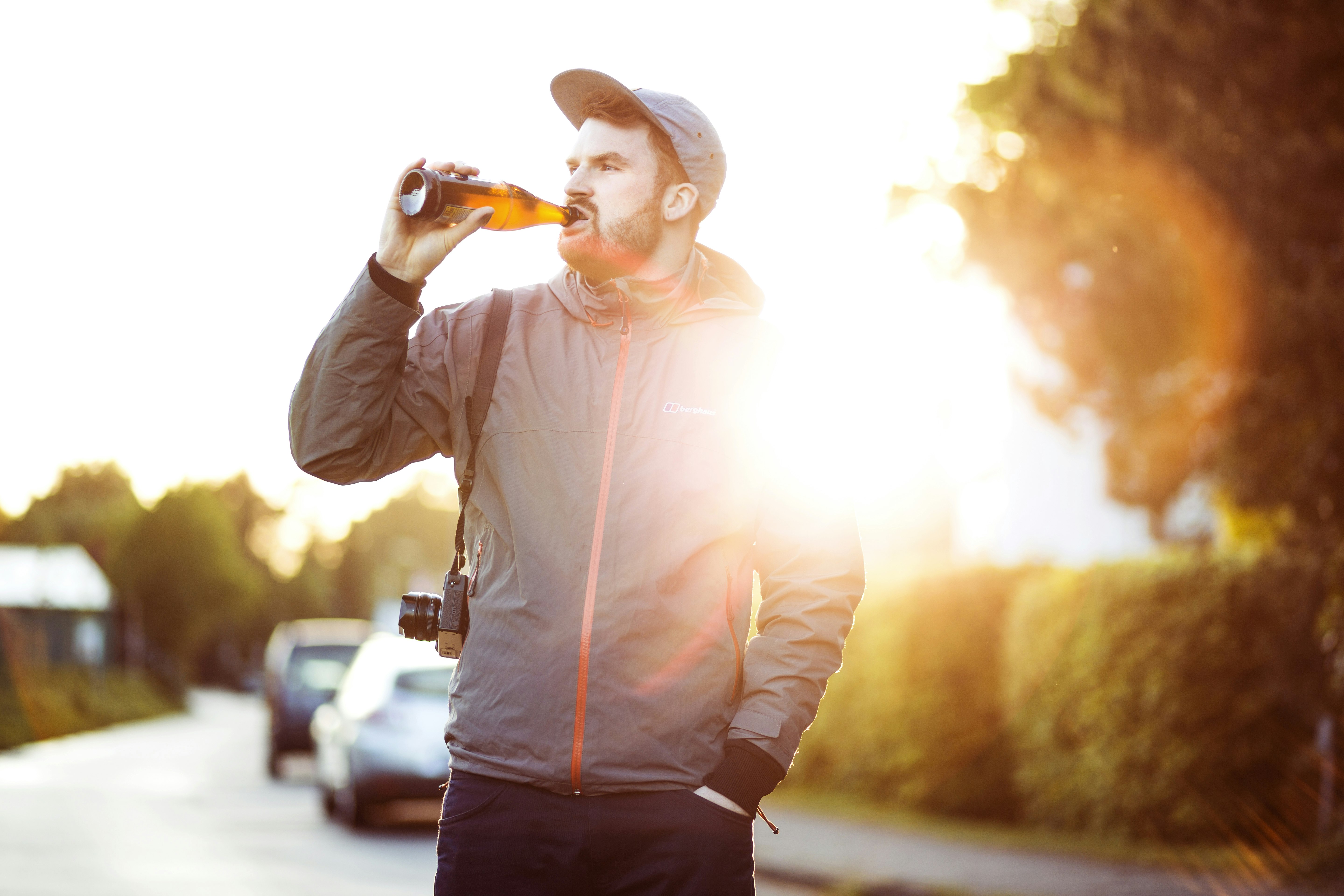
We all know that craft beers are delicious thanks to all their fun flavours and now we also know that by drinking craft beer we are helping the world of science. The search for hop plants, which are integral to craft beer, has pushed science to go further into examining the plant and it’s neighbours – that means the world of botany is expanding. The drive for more varieties of hops has even led to using old ideas in new ways around what medicinal practices hops can be used for!

Flavor is driving the hunt. But, as it turns out, Matthews himself is not only, or even mostly, interested in flavor. The scientific byways, and possible medical uses, are more intriguing to him: the hipster I.P.A. quaffers are, in effect, advancing the frontiers of pure science, enabling the sequencing of the hop genome, and funding ethnobotanical excursions. “I was just in Tbilisi, at the Georgian botanical garden,” Matthews said. “People in Georgia are still into agroforestry—they pick wild strawberries and things in the forest. It turns out rural Georgians have for a long time used wild hops to cure their breads. Hops makes a powerful broad-spectrum antibiotic. It stops bacteria from souring the bread.”

The Georgians have also used hops as a folk medicine for reproductive health, to treat uterine pain, for example. This makes sense to Matthews since hops contain the strongest known plant-derived estrogen. “We are seeking to engineer it,” he said. “We think it can be used for hormone-replacement therapy—for example, in postmenopausal women.”

Read more.

Parents Need to be Nagged by Their Kids

Kids are always being told what they can and cannot not do, and new research says that when it comes to the environment it’s parents that should be told what to do. In a study by Stanford University they have found that children who nagged their parents about energy use made a measurable difference on their household’s energy consumption. The researchers used Girl Scouts as their little energy-conscious eco-warriors.

And these Girl Scouts trooped on home to spread their world-saving knowledge to clueless parents.

The results were promising for residential energy use: Both the girls and their parents showed immediate and long-term improvement. The li’l Scouts reported a 50 percent increase in frequency of energy-saving practices after the experiment, with a 12 percent improvement in parental behavior. Over the following seven months, that rate of improvement halved for both groups: Girls were only minding the light switch 27 percent more than they had been before the study, and their parents only 6 percent.

Read more.

Drivers Need to Learn to Share

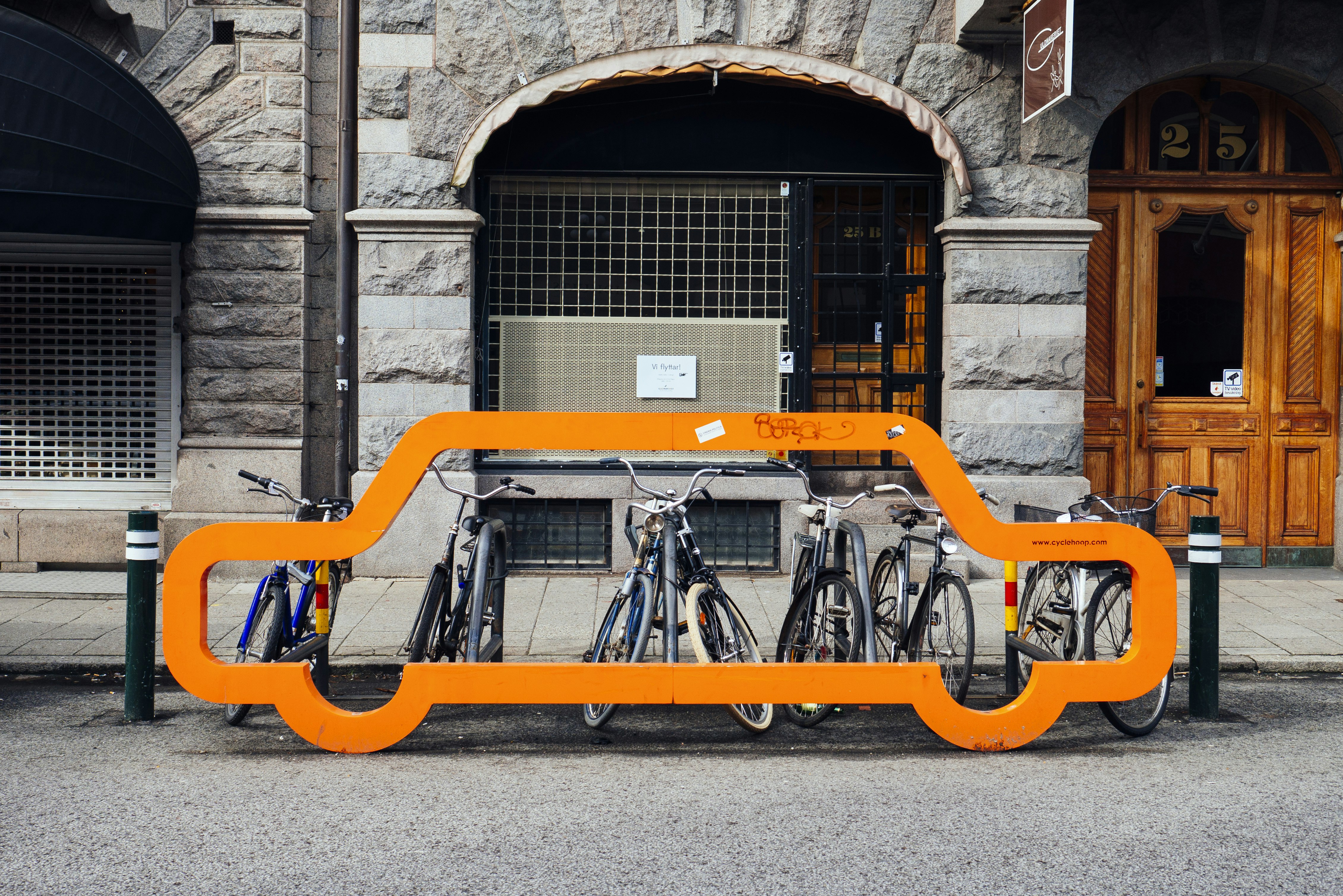
Bicycles are an amazingly fast way to get around cities and countries, as a cyclist I often roll past cars idling in bumper to bumper traffic. The cars (and their single occupants) aren’t getting anywhere anytime soon yet drivers as a group demand more and more infrastructure when really they should learn to share.

In the Globe and Mail, it’s argued that drivers shouldn’t be so selfish and support things like public transit, bike lanes, and other initiatives that actually help people get around. The car as an individual transportation solution needs to go away.

The truth is there’s no immediate solution to traffic congestion. We can wait for trillion-dollar infrastructure projects to get completed. We can wait for a new subway line or bike lane. We can wait for autonomous cars to make better use of the available road space. But until then, we’re going to have to learn to better share the space we’ve got.

Roads are for moving cars as quickly as possible. Pedestrians are a danger and cyclists are barely tolerated. But what if, as drivers, we changed the way we thought about roads? If they’re public space – a quarter of Toronto’s total area – then shouldn’t they be for moving as many people as fast as possible? Sometimes that will mean prioritizing automobiles. Sometimes that will mean giving up a lane to cyclists. Sometimes that will mean giving up a lane to buses.

Read more.

30 Minutes in Your Local Park is Perfect


Urban parks are great and now some Aussie researchers have found another reason to create more of them: it’s really good for your health. We’ve known for years that spending time in nature is good for people but his research augments that knowledge with a timeframe. It takes only 30 minutes of being in an a park to see benefits to one’s health. Which means that you can get enough nature on your lunch break (you should get more though).

“If everyone visited their local parks for half an hour each week there would be seven per cent fewer cases of depression and nine percent fewer cases of high blood pressure,” she said.

“Given that the societal costs of depression alone in Australia are estimated at $A12.6 billion a year, savings to public health budgets across all health outcomes could be immense,” she said.

UQ CEED researcher Associate Professor Richard Fuller said the research could transform the way people viewed urban parks.

“We’ve known for a long time that visiting parks is good for our health, but we are now beginning to establish exactly how much time we need to spend in parks to gain these benefits,” he said.

Read more.

And over at Reddit a user posted a good summary on why nature is good for you:

It’s probably a combination of things. Sunlight allows the body to produce vitamin D, which has been linked with a reduction in depressive symptoms.

When you’re in a park you’re likely walking and doing physical activities, and exercise is positively correlated with improvements in mood and reduced depressive symptoms, not to mention it’s good for the heart, blood pressure, and physical health in general.

Via Reddit.

Solar Sales Soaring Sixfold

Bloomberg is reporting that they anticipate a sixfold increase in star capacity thanks to the efficiency of a having a naturally-occuring ball of fire in our solar system. The sun is an abundant resource which shines its rays on us and now we have the industrial means to convert the sun’s rays into a powerful electric resource.

The growth of solar installations over the last decade of furthered their adoption in a positive feedback loop of success. As more places adopt solar the cheaper it becomes and the more incentive there is to make the whole system more efficient.

The “most attractive” markets for solar panels up to 2020 are Brazil, Chile, Israel, Jordan, Mexico, the Philippines, Russia, South Africa, Saudi Arabia, and Turkey, according to Irena. Global capacity could reach 1,760 to 2,500 gigawatts in 2030, compared with 227 gigawatts at the end of 2015, it said.

Smart grids, or power networks capable of handling and distributing electricity from different sources, and new types of storage technologies will encourage further use of solar power, Irena said.

As of 2015, the average cost of electricity from a utility-scale solar photovoltaic system was 13 cents per kilowatt hour. That’s more than coal and gas-fired plants that averaged 5 cents to 10 cents per kilowatt hour, according to Irena. The average cost of building a solar-powered electricity utility could fall to 79 cents per watt in 2025 from $1.80 per watt last year, it said. Coal-fired power generation costs are about $3 per watt while gas plants cost $1 to $1.30 per watt, according to Irena.

Read more.