Caring People Have More Sex

love
It turns out that nice guys do get the girl (but not these nice guys), and nice girls too! Altruism has been linked to more sexual partners and better relationships. There is a growing body of research that connects people who are emphatic are good partners to have in life. Over at Scientific American they have an article on how researchers are contrasting the concept that people need to be jerks to attract a mate.

Remember it’s good to be nice regardless of how much sex one gets.

This theory suggests that altruism may serve, in part, to convey one’s value as a mating partner, including one’s concern for others and likelihood of cooperating with future mates.  Research has shown that we prefer altruistic partners, all else being equal; especially for long-term mating (the evidence for altruism being preferred in short-term mates is mixed). Not surprisingly, then, the pull to demonstrate one’s altruism can be strong. Some research has shown that men will actively compete with one another (termed competitive altruism) by making charitable donations to women. Interestingly, these charitable donations increase when the target of one’s altruism is physically attractive.

Read more.

Capturing Animals in 3D for the Future

thanks co.exist!
We are witnessing one of the largest extinction events in history because people deny that climate change is happening. Regardless of the deniers and the death of entire species we can do something that will help the future of humanity: getting as much information about those species as we can while they are alive.

One way to understand species is to just look at them. That’s exactly what some people are doing, they are capturing a “Noah’s Ark” of 3D digital images of animals before they go extinct.

The photographs are captured quickly, though the researchers are tweaking the system so it will eventually work even faster. “The current design is for animals that are willing to pose for a second or two for a photograph,” says Irschick. “But we’re moving toward systems that would work with a moving animal.”

There are 4,000 frog species in the world, and the team plans to start by digitally preserving 40 to 60, working as quickly as possible. For one species they planned to scan—Rabbs’ fringe-limbed tree frog—the last known individual in the world died in September.

Read more.

Easily Browse Online Anonymously

In a world where our digital lives are tracked by democratic governments (Canada and the UK amongst them) we need to ensure that we can have private conversations online. Over at Digg they have collected a very easy to follow setup to get your protecting your privacy online in only an hour!

Keep Your Private Conversations Private

It’s rude enough for a stranger to even eavesdrop on your conversations in a place as public as a park. So opting to use messaging services with end-to-end encryption doesn’t make you some sort of criminal or tin foil hat-wearing nut. Whether you mind or not, there are organizations out there that are just scooping up every chat (Hello NSA!) you send out over the internet. No one is actively looking at them, or might ever look at them, but they’re listening so you might as well turn some music on or something.

It’s sort of like taping over your webcam or looking both ways before you cross the street — it’s such an easy and painless thing to do that it far outweighs the consequences of not doing that thing.

Read more.

Think that because you have “nothing to hide” that you shouldn’t be concerned about being tracked? Or that it’s OK for the democratically elected governments to justify mass surveillance? Well, Edward Snowden has a nice and short counter argument:

Some might say “I don’t care if they violate my privacy; I’ve got nothing to hide.” Help them understand that they are misunderstanding the fundamental nature of human rights. Nobody needs to justify why they “need” a right: the burden of justification falls on the one seeking to infringe upon the right. But even if they did, you can’t give away the rights of others because they’re not useful to you. More simply, the majority cannot vote away the natural rights of the minority.

Taiwan is About to Legalize Same-Sex Marriage

love

Taiwan might be the first Asian nation to legalize same-sex marriage. The country is working on legislation that will permit people who love each other and are of the same sex to marry, which is a great thing to see! Let’s hope that other places in the region follow suit and begin the process of changing their legal systems to reflect reality.

I think it’s worth noting that some of the earliest posts on this site were about countries doing the same thing. Both Canada and Spain legalized same-sex marriage in 2005.

Taiwanese lawmakers are currently working on three bills in support of marriage equality, one of which is already listed for review and could be passed within months. Same-sex marriage also has the prominent support of President Tsai Ing-wen, Taiwan’s first female head of state.

About 80 percent of Taiwanese between ages 20 and 29 support same-sex marriage, said Tseng Yen-jung, spokeswoman for the group Taiwan LGBT Family Rights Advocacy , citing local university studies. Taiwan’s United Daily News found in a survey taken four years ago that 55 percent of the public supported same-sex marriage, with 37 percent opposed.

Read more.

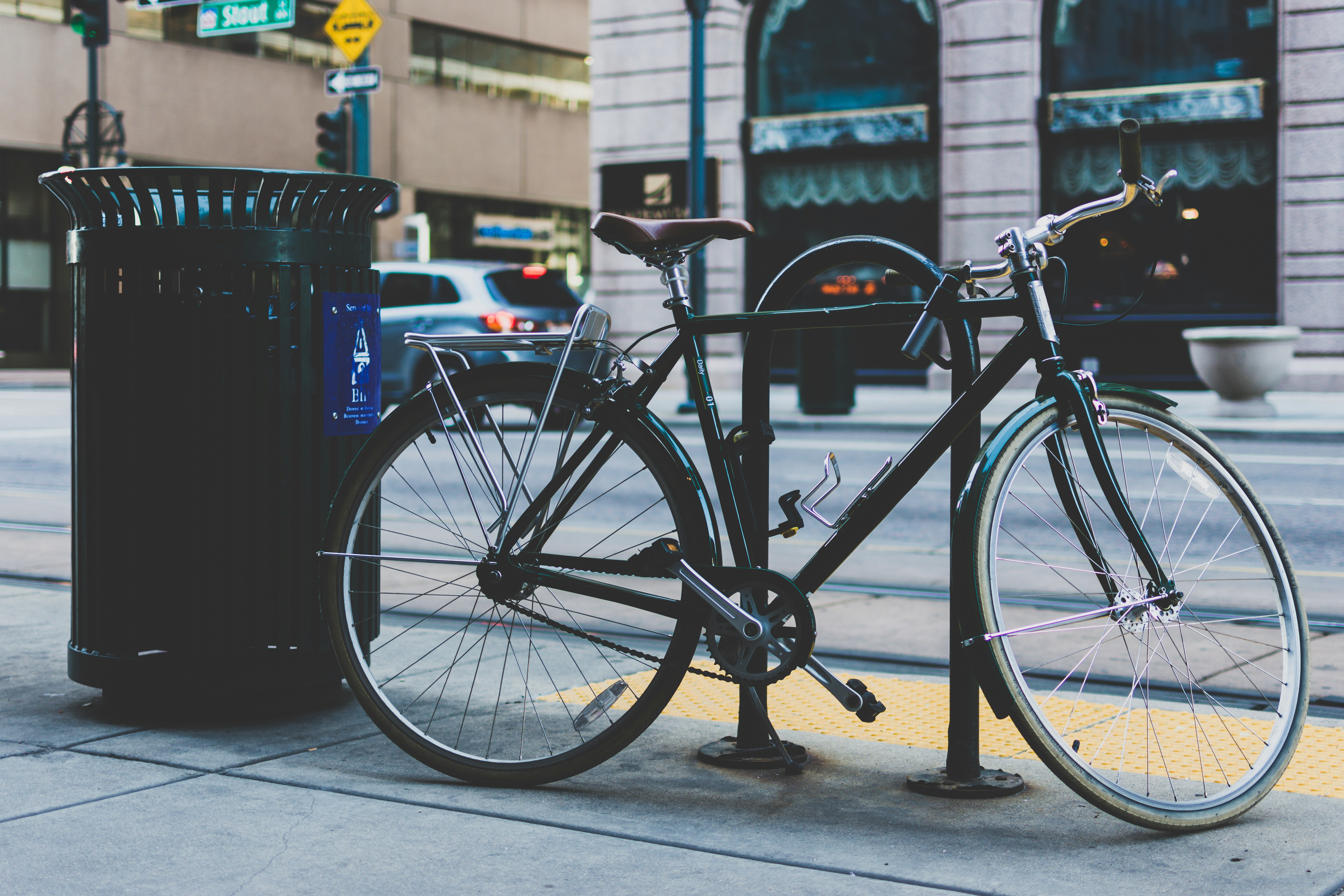
Bike Lanes Save Lives of Non-Cyclists

bike
Cities can improve the health and well being of everyone by simply adding bike lanes. That’s right, drivers not only benefit from faster traffic flow they also benefit from increased health when cities install bike lanes. As Bloomberg reports, cities around the world are catching on and adding bike lanes to benefit all citizens.

There’s math to show how cost-effective the strategy could be for public health. When New York spent about $8 million in 2015 on bike lane expansion, the cost per additional “quality-adjusted life year,” or QALY, was about $1,300, according to the Mailman paper.
A QALY, pronounced “qually,” is a standard measure of cost-benefit analysis. It takes into account the number of people who benefit from an intervention, how many years of extra life they can expect to get, and how healthy they will be during the extra years.
As it turns out, when you apply this to bike lanes, it makes them more economical per added QALY than, say, kidney dialysis, which costs over $100,000 per QALY—although not quite as cost-effective as standard vaccines, which cost in the low hundreds of dollars per QALY, Mohit said.

Read more.