
Slavoj Zizeck is a modern thinker that has done a great job of critiquing the overarching assumptions in our society when it comes to power dynamics and the insidiousness of neoliberalism. In the video above his views on capitalistic consumption are summed up rather nicely. It’s worth the ten minute coffee break to watch it. Just be conscious of where you get your coffee from.
Author: Adam Clare
Simplify Your Wardrobe by Wearing the Same Thing

Staying on trend in the world of fashion is hard! It’s hard on individuals and fashion is really hard on the environment. So make things easier on you and the planet by wearing the same thing everyday.
By wearing the same style, not necessarily the same article of clothing, you can make your life easier. Its one less series of decisions you have to make throughout the day and will let you get your day off to an easier start. Plus you can save money!
Men can just wear a suit everyday and get away with it. If you think this is too hard for women, here’s an entire conversation on how you can pull it off.
So if you look at the direct costs of the outfit I wear every day, and the indirect layering-and-replacing costs, I’ve spent about $834.95 in the past 18 months on my work clothing. Which you know what? Is probably what I spent over the course of six months before starting up this whole crazy idea in the first place.
But here’s the thing: this was never about the money. (Or, lol, the “fashion.â€)
This was 100% about not having to think about what I had to wear to work every day. Eliminating that one decision saved me hours of stress, and piles and piles of feeling uncertain and awkward and less-than-totally-confident during my day to day. Decision fatigue is real, friends, and I’d rather spend my limited decision-making energy on things that make a real impact, like my work or my relationships or literally anything other than my clothing. I just don’t care about it enough to spend any more time than I have to thinking about it.
Little Towns Doing Good Things About Climate Change
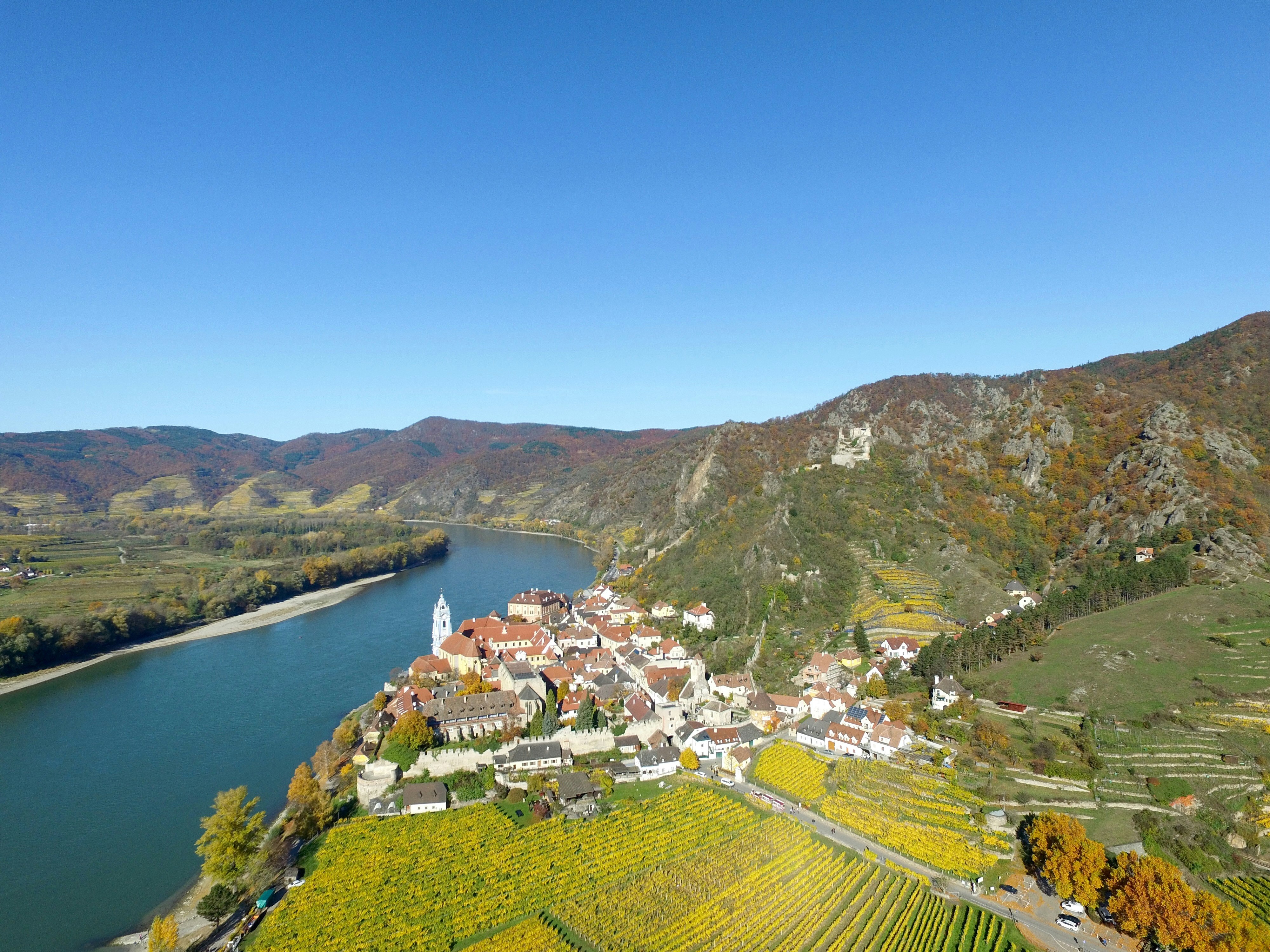
Even the tiniest of towns can do good things for the environment and contribute to global efforts to fighting climate change. We usually cover big cities and their efforts of improving their relationship with the natural environment, so it’s worth looking at the other end of the scale. We’ve looked at a zero-waste town in Japan, a town banning bottled water, and way back in 2007 we looked at a town banning smoking around kids and another that was Europe’s first town to ban plastic bags. This all proves that no matter where you live you can make the world a better place and maybe you can get inspired by these villages.
Grist has collected recent examples of small towns making big change. Here’s one that decided to fight apathy:
Ashton Hayes, a small town in the British countryside, set out to be the country’s first carbon-neutral community in 2006. But instead of using policy to regulate emissions, the community-led initiative focused on changing residents’ behavior. The townspeople strung up clotheslines, took fewer flights, and improved the insulation in their homes, shrinking their total carbon footprint by 40 percent so far.
Garry Charnook, the villager who jumpstarted the town’s low-carbon quest, told the New York Times: “There’s so much apathy. We need to squeeze that layer of apathy jelly and get it out.†About 200 towns, cities, and counties from around the globe have reached out to the Ashton Hayes community to learn how, exactly, they squeezed their “apathy jelly†(what is that — a dessert?) and got to work.
Read about more towns making change.
Thanks Delaney!
A New Look at an Old Place Wins Prestigious Japanese Award

Hajime Narukawa has won the Good Design Award for a making a map. It might seem trite to some of you but a map has the power to change the way we think about the world. Sadly the most popular map printed today uses the Mercator projection which was originally designed for mariners (and worked really well!). The problem is that the Mercator projection has a multitude of flaws which greatly distorts reality; for example, Alaska appears to be larger than Brazil despite the fact the opposite is true. This representation of the globe distorts our thinking about it.
With that context in mind, the fact that a map won the Good Design Award must imply that it does something quite different. The map is known as an AuthaGraph projection and it does something that most maps can’t do.
Narukawa developed a map projection method called AuthaGraph (and founded a company of the same name in 2009) which aims to create maps that represent all land masses and seas as accurately as possible. Narukawa points out that in the past, his map probably wasn’t as relevant. A large bulk of the 20th century was dominated by an emphasis on East and West relations. But with issues like climate change, melting glaciers in Greenland and territorial sea claims, it’s time we establish a new view of the world: one that equally perceives all interests of our planet.
Global Carbon Output Decreases

In order to avert catastrophic climate change we need to dramatically cut global carbon output. That’s what the Paris Agreement is all about and it comes in to force in just three more days. The really good news is not just that we have decreased carbon output it’s also that the Paris Agreement is going to accelerate the decline. Things are looking good in the carbon reduction portfolio!
The biggest driver was a decline in China’s coal consumption, which resulted a 6.4% drop the carbon intensity of the world’s second biggest economy.
A centrally-led shift of the economy to a service-based industry has begun to shut down the vast coal-fuelled steel and cement sectors. For the first time, China led the rankings table for the biggest drop in intensity.
The UK and US were also significant contributors, reducing by 6% and 4.7% respectively, to the overall drop as both governments introduced policies that pushed coal plants out of business. In the UK coal use dropped by 20% for the second year running.
Richard Black, director of the Energy and Climate Intelligence Unit (ECIU), said: “In the week in which the Paris Agreement comes into force, this is very promising news in showing that the dominant paradigm of economic growth is swiftly changing, which makes the Paris targets look more achievable.