Tag Archives: Mind Space

Aloha!

pictureThey say, “Everyone who visits Hawaii wants to live there.”  A good reason to move: free access for residents to Hanauma Bay, a blue jewel in the eye of every snorkeler and scuba diver.

Located in Oahu, near Waikiki, Hanauma Bay was declared a protected marine life conservation area and underwater park in 1967. The bay floor is actually the crater of an ancient volcano that flooded when the exterior wall collapsed and the ocean rushed in.  Because of the physical makeup, the water is almost always calm — except for the kids (and adults) who scream excitedly when coming upon sealife.  Visitors are almost never disappointed, being able to swim amongst fish, some the size of their heads!

All first-time visitors watch a video before heading to the beach.  The presentation highlights a few conservation points, such as:

  • don’t feed or touch the sealife, or coral
  • don’t chase the fish
  • don’t walk on the coral reef
  • use the restroom before you swim

The number of daily visitors is limited, in order to preserve this natural sea park.  So, people are encouraged to arrive early (it’s open by 7a.m.).  The educational site for Hanuama bay can be found here.

*Artist Spotlight*

adi.JPGOur artist spotlight this month is Toronto’s Adi Zeharia. Adi is attaining her Bachelor of Fine Arts at the Ontario College of Art and Design this year. Through her acceptional talent she has been awarded several scholarships and her work has been seen in over 7 exhibitions over the past three years. Adi has created her own unique style by breaking up forms into shapes, to be both of aesthetic interest to and to create a playful atmosphere. Her work is colorful and ethereal and is laced with intriguing whimsical qualities.

In some of her most recent work she is exploring the concept of how our society views death. Adi looks at a connection with animals and nature to explore how we might find a more peaceful relationship to our own finite nature.

“In the West (or in an urban envirionment) it feels like there’s a societal denial of that relationship, and maybe people would make better choices in life, if they formed stronger understandings of their deaths…. maybe thats why having a relationship with nature makes people feel more alive, because nowhere is death more evident…”

You can view Adi’s collection of work here.

Share and Save

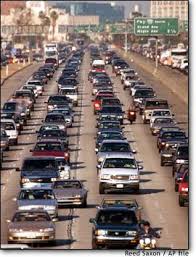
trafficWe’ve covered car sharing programs before on ThingsAreGood and I don’t think this will be the last time we mention them.

The BBC is running a good article on car sharing in the UK. Richard Ghail writes about how carpooling is a great way to meet people, save money and the environment all in one go.

He credits the congestion charge in London reinforces of environmental protection. What’s more, he points out that the economy benefits from less congestion on the road.

Study At Yale – For Free!

Studying at Yale is beyond the means of most, with high admissions standards and a hefty price tag of about $46 000 a year for tuition and board.  Now, thanks to a new initiative to make the Ivy League school more accessible and a $755 000 grant, courses will be available for free on the internet.

This facility is already offered by other institutions including the likes of MIT and Princeton, Yale will be the first to offer videos to accompany course notes and transcripts of lectures. The initiative will include 7 first year courses.

The courses will not be counted as credits towards a Yale University Degree, nor will they substitute normal lectures.

30 ways to leave a non-lover

Canadian copyright guru Michael Geist has posted 30 Days of DRM: 30 Things You Can Do. It’s Canada-specific but you an adopt what he suggests to your locality.

Some of his suggestions:
Ask each political party where it stands on copyright.
Write to your local school board.
Buy online DRM-free alternatives
Write to Library and Archives Canada to ask that it support the preservation of Canadian heritage

To find out why DRM isn’t good check out what wikipedia has to say. Basically DRM can limit access to important documents and limit what you can do with things you buy.