First Nations Reserves Across Canada to get Toronto Library Cards

books

A fantastic way to share stories and knowledge is through books and public library systems. Unfortunately too many indigenous reserves and communities in Canada don’t have access to a library, which is having a negative impact on knowledge sharing. The Toronto Public Library system will be extending their library services to indigenous communities as part of their Truth and Reconciliation process.

Library services are sparse on Ontario reserves. Of the province’s 207 reserves, only 46 have a library. The average annual budget for each is only $15,000.

Doucette explains that libraries are all about sharing, and this is an easy way for Toronto to do its part. “I think whenever possible we should step up to the plate,” she said.

Read more.

Americans Eating Beans Instead of Beef Will Help Save the World

beans

If Americans started eating beans in place of beef the country would be able to meet its greenhouse gas (GHG) reduction goals by 2020. The report, title, “Substituting beans for beef as a contribution towards U.S. climate change targets,” builds off of previous work. The new report that makes this conclusion is similar to the conclusions from other papers; however, this report directly connects an easy dietary change to being able to avert catastrophic climate change. Previously we’ve seen how easy and beneficial it is to be vegetarian, but this diet change doesn’t require a complete shift to vegetarianism. Just reduce the consumption of flesh from dead animals.

It’s simple: the easiest thing you can do today to help the people of tomorrow is to eat less meat.

“The nation could achieve more than half of its GHG reduction goals without imposing any new standards on automobiles or manufacturing,” Sabate said.

The study, which was conducted while Harwatt was an environmental nutrition research fellow at Loma Linda University, also found that beef production is an inefficient use of agricultural land. Substituting beans for beef would free up 42 percent of U.S. cropland currently under cultivation — a total of 1.65 million square kilometers or more than 400 million square acres, which is approximately 1.6 times the size of the state of California.

Harwatt applauds the fact that more than a third of American consumers are currently purchasing meat analogs: plant-based products that resemble animal foods in taste and texture. She says the trend suggests that animal-sourced meat is no longer a necessity.

Read more.

Prototype Parkinson’s Bracelet Stabilizes Hands

Parkinson’s negatively impacts millions of people around the world by making their muscles harder to control. Basically, in people with Parkinson’s the brain fires extra signals which can cause involuntary muscle movements like shaking. Think of it as your brain stuck in a feedback loop of excitement which it can’t escape – no matter how hard you try. This is where the Emma Watch comes in. The Emma Watch tries to confuse that feedback loop allowing wearers with Parkinson’s to have full control over their hands, and the early prototype works even though nobody fully understands why it works. Research like this will help people with Parkinson’s live a much better life.

The pattern of the vibration is also important. For Lawton, a rhythmic vibration is effective. (A specially designed app in Emma’s Windows 10 tablet controls vibration speed.) For other people, a more random rhythm may work better, Zhang says. However it works, she knows she’s onto something. Lawton does, too.

“It’s a huge opportunity to potentially change some lives,” Lawton says.

As part of her work, Zhang researched the root cause of tremors. She spent six months, off and on, building prototypes. She sometimes worked in her London home, soldering wires to PC boards and tinkering with coin cell motors to create vibrations. She tested early versions with four other people with Parkinson’s, producing promising results for three, spurring the idea forward, she says.

Read more.

Blockchain Technology to Track Real Blocks

Blockchain technology is changing the world of commerce and law, now it can be used to track real world blocks instead of just digital blocks. The technology got attention thanks to the rise of Bitcoin, which is still going strong, and has been improved since then. More recent takes on the technology like Ethereum have evolved blockchains to be more robust, faster, and malleable for unique circumstances. A new startup, Peer Ledger, wants to use this technology to monitor ethical mining practices.

However, Ms. Jutla says there is mounting pressure from the international community to stop the unethical production of minerals, and she says Peer Ledger’s Mimosi product provides a solution to this problem. Mimosi uses a private permissioned blockchain, which chronologically and permanently logs information that’s copied across a computer network accessed by multiple collaborating parties. When a transaction is carried out, it’s grouped together in a cryptographically protected block. In the case of the Mimosi technology, every transaction involving a source of ore can be linked back to older blocks containing previous sales transactions for the ore. This allows Mimosi users to trace gold and other precious and industrial metals (mainly tin, tantalum and tungsten) from the refiner, to the processor, to the distributor.
…
Ms. Jutla is confident customers will want Mimosi. Not only does she think the technology will make it tougher for unethical sources of precious and industrial metals to make it into the supply chain, she says it will reduce a client’s compliance costs in this area by 75 per cent.

Read more.

Billionaire Shipping Magnate Sponsors WWF Research Vessel


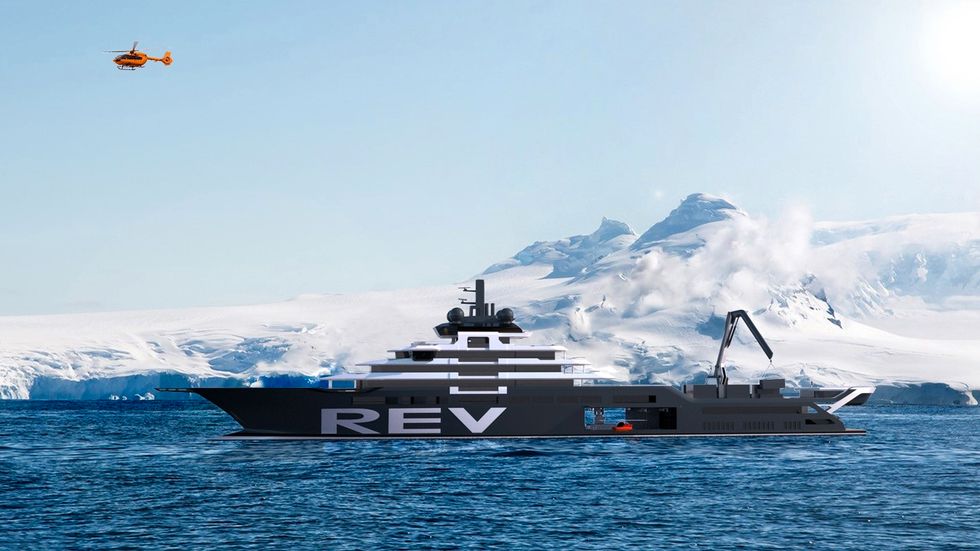
Kjell Inge Røkke made billions from running a shipping company and now he wants to give back to the very thing that made him wealth – the high seas. He has committed to giving away most of his fortune to better the world, and he just announced his donation to WWF Norway. His donation is specifically going to a research vessel that will provide scientists a great way to research the oceans. What’s more is that the same ship will be able to remove 5 tonnes of plastic from the ocean everyday!

Røkke, a former fisherman, said the oceans “have provided significant value for society” and directly to him and his family.

“However,” he noted, “the oceans are also under greater pressure than ever before from overfishing, coastal pollution, habitat destruction, climate change and ocean acidification, and one of the most pressing challenges of all, plasticization of the ocean. The need for knowledge and solutions is pressing.”
…
“The REV will be a platform for gathering knowledge,” Røkke told Business Insider. “I would like to welcome researchers, environmental groups, and other institutions on board, to acquire new skills to evolve innovative solutions to address challenges and opportunities connected to the seas.”

Read more.