Standing Rock Sioux Achieve a Victory

Standing Rock #DAPL

This is proof that direct protest action works.

The US Army Corps of Engineers has decided to not grant permission to allow the Dakota Access pipeline to be built as planned. The pipeline was meant to go through burial lands of the Standing Rock Sioux which is offensive in itself, but there’s more to it. The pipeline would have also greatly harmed the local ecosystem and drinking water. In the event of a spill (and pipelines spill all the time) the damage to the natural environment and to people would be epic.

Despite these risks, Energy Transfer Partners and the Army Corps of Engineers will continue to try to build the pipeline elsewhere. Of course this recent development will make it harder to do so and the protestors will continue to fight big oil for the average person’s right to clean water. What’s more, is that the economic argument for pipelines is weak at best.

The Army Corps of Engineers will not grant the permit for the Dakota Access pipeline to drill under the Missouri river, the army announced on Sunday, handing a major victory to the Standing Rock Sioux tribe after a months-long campaign against the pipeline.

…
The announcement came just one day before the corps’ deadline for thousands of Native American and environmental activists – who call themselves water protectors – to leave the sprawling encampment on the banks of the river. For months, they have protested over their fears that the pipeline would contaminate their water source and destroy sacred sites, and over the weekend hundreds of military veterans arrived at the camps in a show of support for the movement.
Read more.

Public Transit Makes Cities Safer

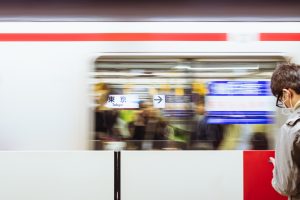
subway transit

Obviously public transit is great for getting people around cities and is a very scalable traffic solution. One spinoff of a good public transit system is that the streets get safer. In Canada he number of collisions increases every year with the vast majority of these collisions the result of driver error. With public transit something else is happening and it’s thanks to the driver training and supportive infrastructure.

Instead of driving yourself, take transit. It might save your life.

Commuter trains, buses, streetcars, and subway trains are all safer forms of transit with much lower rates of injury and death than automobiles; they are heavier and stronger vehicles, they are larger and more visible, they often travel in their own right-of-ways, and (perhaps most importantly) they are operated by highly trained drivers.

All of these factors produce a much stronger safety record: these vehicles are less likely to be in a collision, and in the rare occasion that they are, their passengers are less likely to get hurt.

A September 2016 report from the American Public Transportation Association [PDF] argues that we need to start thinking about the role public transit can play in public safety.

Read more.

47 Developing Countries Leapfrogging to Renewables

wind turbine

At the tail end of the Marrakech UN conference on the climate 47 countries formed the Climate Vulnerable Forum to share the one goal: getting to 100% renewable energy as fast as possible. Previously, economists and politicians argued that developing countries will need to use coal or other destructive carbon-based energy before upgrading to renewables. With the cheap price of solar panels and other non-carbon intensive electricity it looks like these countries can skip coal. They are hoping to replicate the infrastructure “leapfrog” that mobile phones created in much of the world with renewable power.

Members of the CVF hope to perform the same kind of ‘leapfrogging’ with regards to energy.

The 47 members of the CVF – which includes nations like Bangladesh, Ethiopia, and Haiti – say they’ll “strive to meet 100 percent domestic renewable energy production as rapidly as possible, while working to end energy poverty and protect water and food security, taking into consideration national circumstances”.

The goal is to have all of these systems in place some time between 2030 and 2050, and the members have committed to presenting a detailed plan to the UN by 2020.

Read more.

It’s Time for the Economy to Shrink

money
money

With the frequent boom and bust cycles the economy goes through it is rare for people to argue that perhaps the downward portion of cycles should continue. Shrinking the economy can actually be a good thing when done with good direction. DW has gathered many examples of places and people around the world that are improving despite their economies declining.

Instead of recklessly pursuing economic progress we should consider slowing down and pursue sane economic and environmental progress.

Currently, few question the pursuit of economic growth. From national economic policies to international programs for sustainable development, growth has typically been the goal.

But some economists now argue that on a planet with finite resources, we may have to stop growing in order to survive.

“More economic growth means more and material extracted out of nature, and more and waste after we use these materials,” sais Giorgos Kallis, an ecological economist and editor of “Degrowth: A Vocabulary for a New Era.”

“With the current level of economic growth – and aspired levels of growth – there is no way to avoid dramatic and catastrophic change of the climate.”

Read more.

James Burke Connections App for Your Thinking Needs

James Burke is known for his series on BBC called Connections, which was all about how seemingly random inventions (or concepts) are actually connected in interesting ways. He has spent his life advocating for people to look at the in-between of industries and fields of research because it is there that we find true innovation.

In our modern era we find that we can create our own filter bubble (which is a big issue with the recent election in the USA) which can make finding connections a problem. Burke’s solution to this is to Kickstarer an app that uses his own specially designed database and cross-references it with Wikipedia in order to help you break out of your bubble and discover cool new connections!

You may have noticed that when we browse the news or type into Google we tend to seek confirmation more than we do information. We predict our current model will remain untarnished. When we want to make sense of something, we tend to develop a hypothesis just like any scientist would, but when we check to see if we are correct, we often stop once we find confirmation of our hunches or feel as though we understand. Without training, we avoid epiphany by avoiding the null hypothesis and the disconfirmation it threatens should it turn out to be valid.

Since the 1970s, Burke has predicted we would need better tools than just search alone if we were to break out of this way of thinking. His new app aims to do that by searching Wikipedia “connectively” and producing something the normal internet searches often do not – surprises, anomalies, and unexpected results.

Read more.
Check out the Kickstarter.