Seven Hybrid Concerns?

People seem to not like change and changing from a car that produces smog to a car that produces less smog is shocking for some. They don’t know what is true and what isn’t true when it comes to information about hybrid vehicles. CNN has tried to clarify what people should consider when buying a hybrid car and other points that aren’t that important.

Of their list below only three are “legitimate” concerns.

  1. Hybrids have complicated technology that is difficult or expensive to fix
  2. Hybrids have limited battery pack life
  3. Hybrids have technical problems like stalling and sputtering
  4. Hybrids do not pay for themselves to justify their premium cost
  5. Hybrids do not offer the driving performance needed
  6. Hybrids will not hold resale value
  7. Hybrids do not get the level of mileage promised

Share and Save

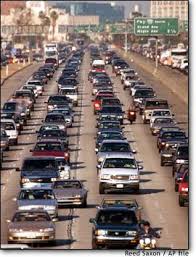
trafficWe’ve covered car sharing programs before on ThingsAreGood and I don’t think this will be the last time we mention them.

The BBC is running a good article on car sharing in the UK. Richard Ghail writes about how carpooling is a great way to meet people, save money and the environment all in one go.

He credits the congestion charge in London reinforces of environmental protection. What’s more, he points out that the economy benefits from less congestion on the road.

California Sues Car Companies for Health Damage

thanks yahooThis is big news! Maybe this will have the same impact that suing tobacco companies had. The state charges that car companies have damaged people’s health because of the emissions of their products.

“California filed a global warming lawsuit on Wednesday against Ford Motor Co., General Motors Corp., Toyota Motor Corp. and three other automakers, charging that greenhouse gases from their vehicles have cost the state millions of dollars.

State Attorney General Bill Lockyer said the lawsuit filed in U.S. District Court in Northern California was the first of its kind to seek to hold manufacturers liable for the damages caused by their vehicles’ emissions.

The lawsuit also names Chrysler Motors Corp., the U.S. arm of Germany’s DaimlerChrysler AG, and the North American units of Japan’s Honda Motor Co. and Nissan Motor Co. Ltd..

The lawsuit charges that vehicle emissions have contributed significantly to global warming and harmed the resources, infrastructure and environmental health of the most populous state in the United States.”

Safer Driving Rules For Kids

On Monday, a new traffic law will force Londoners to buckle up their children or face stiff penalties. From September 18, all children under four foot five inches (about 135 cm) must be secured in a car seat or booster seat. Those who ignore this rule will face a mandatory traffic fine of £30 to £500 (if referred to court.) Although many parents strap their children in, many do so incorrectly and allow the children to use adult seat belts before they are big enough to do so. Air bags can also cause serious injury to children who are strapped into car seats in the front passenger seat. “Most people make sure that children use some kind of restraint when travelling on the road, but it is vitally important to use the right one; and not to use an adult belt before the child is big enough,” said Transport Minister Stephen Ladyman. The move aims to reduce the high number of serious injuries and deaths caused by improper restraints each year.

Stockholm Syndrome

from wikipedia The Toronto Star has an article about how Stockholm is dealing with traffic. They are going to vote on permanently implementing a congestion charge like London’s. They performed a pilot test for the charge and people hated the idea, then people saw the benefits of a congestion charge and opinion switched quickly.

The article does a bit of comparing and contrasting with Toronto, but concentrates on the good policies that Stockholm has adopted.

“”We have too many cars and too few roads,” says Soderholm. “We had to do something. Traffic was growing worse and people were getting more and more annoyed. For the Social Democrats, the environment was the primary concern. For the conservatives, it was to make Stockholm more attractive to business.”

The charges were in force from Jan. 3 to July 31. Though there were many exemptions, most drivers had to pay a fee ranging from $2 to $3.50, to a daily maximum of $10, every time they drove in and out of the designated zone. The fee applied Monday to Friday, 6:30 a.m. to 6:30 p.m.
The cost of the trial, about $500 million, was paid for by the national government.
Needless to say, the majority of Stockholmers were adamantly opposed to the fee when the idea was first raised last year.
“Resistance was highest before the program started,” says Gunnar Soderholm, Stockholm’s deputy chief executive officer. “Basically, the Green Party forced the ruling Social Democrats to support the congestion zone. A lot of Social Democrats thought it was political suicide. The media had also been strongly opposed to it, but switched immediately. People could see with their own eyes what the benefits were — better traffic and environmental conditions.”