Scientists at the Harvard Medical School have managed to protect test rats from heart failure by injecting ‘ self-assembling peptide nanofibers loaded with pro-survival factors’. Research has not yet begun on humans.
The article contains great images from inside the rats’ bodies, as well as a link to the Nanotechnology Art Gallery. Enjoy!
Category Archives: Technology
Online Rights Canada
Online Rights Canada is a new grassroots that aims to promote the rights of Canadians online. They are sponsored by the EFF and CIPPIC.
From the ORC site:
“We believe that Canadians should have a voice in copyright law, access to information, freedom from censorship, and other issues that we face in the digital world.”
Fake Trees Can Clean Air
Ironically, a plan for fake trees only exists on paper right now. Dr Klaus Lackner, from Columbia University, has proposed a “fake tree” that can clean the air of CO2. The tree can the air of 90,000 tonnes of CO2 a year.
Right now it is cost-prohibitve to build the fake trees because the filtering material is very expensive to recycle. Dr. Lackner sees making artificial ways to clean the air of car emissions ,and other CO2 sources, has a very important step in saving the planet.
Microwave Water to Save Energy
Pulsar Advanced Technologies will launch a new product that heats water on demand. It is a water heater that has super-heating capabilities because it uses microwaves to heat the water. By heating on demand it means that hot water will not have to be stored, which means that the deadly Legionella Pneumophila is a non-threat.
The heater, affectionately known as the Vulcanus MK4, will be shown in Toronto at a construction conference next week. The Vulcans MK4 can heat water from near-freezing to near-boiling in seconds.
Japanese May Make Better Biodiesel
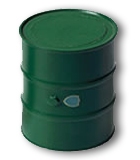 Japanese researchers have found a more efficient way to produce biodiesel by using common place sugars. The sugars used are cheaper to purchase and do just as good a job of turning fatty acids into a badly-needed liquid as the currently used chemicals.
Cheaper production of biodiesel could lead to a greater adoption of the fuel since it takes little (or nothing) to make diesel cars run on the fuel. About 40% of cars in Europe consume diesel, with the market in the United States of America expected to grow as a result of rising gas prices.