
Crops that Survive!

The fundamental ineffeciency if farming has always been that crops die at the end of season. This requires huge investments in organic matter removal, tillage, replanting and large quantaties of fertilizer, water and pesticides. The top 25 producing crops in the world are annuals but researchers at the lands institute want to change all that by switching to perrenial crops modelled after prarie grasslands. Grasslands are the most effecient self regulating ecosystems on the planet, requiring little input of materials, with incredible resilence to harms.

Researchers have been able to create stable ecosystems that requires less than 1/100 of the energy and inputs (no pesticides required the plants take care of themselves) with yields comparable to least productive farmland nowadays. The big difference being the land institute farms are sustainable the least productive farmlands exponentially require more resources and are suseptible to collapse.

Free Fuel always at arms length

CAT is one of the first words a child learns to speak and spell and hopefully the meaning will shift from our feline friends to the new class of compressed air powered cars. Developed by Guy Negre in 2002 Guy’s fundamental shift in design moves away from distributing fossil fuels across vast distance to fuels that are arguably the most abundant, air. C.A.T. (which stands for compressed air technology) cars would be able to fill up virtiouly anywhere in the world for pennies per mile, only the cost to compress air which could be supplied by renewable energy. Within urban areas the car uses compressed air up to speeds of 50 km/h with ZERO pollution. Highway transit uses a mixture of fossil fuels and compressed air. Imagine a world where the resources are so abundant and renewable and accessible that everyone could afford a car and there is little to no pollution and most importantly wars are not fought over resources.

Sustainable Cities in China

China has started a pilot project for sustainable cities in Liaoning Province named the Cradle to Cradle Village.roof top garden

“The design of the village aspires to draw power from the sun, to maintain materials in closed-loop systems of technical and biological nutrition, and to create an intergenerational community of people productively engaged in restorative commerce. Its goal is to provide a higher quality of life for the villagers and to exemplify a more hopeful future for the children.”

For more information the BBC has a good article looking into sustainability in cities.

Fake Meat no Longer for Vegetarians

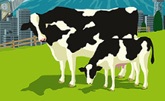
NASA has been looking into making meat in a lab. A recently published academic paper proves thatchicken nuggets no longer need to be attached to those clucking chickens.cows In addition to the obvious life-saving benefits, manufactured meat would allow the manufacture to control how much nutrients are in each slice. For example omega 3, which is a good thing, can replace omega 6, which is not as good for you.

One reason some people are vegetarian is because of the environmental effects of raising livestock for human consumption; lab meat will make environmentally unfriendly farming obsolete.

Sure some vegetarians may have to reexamine if they should/can eat lab-made-meat, but the fact that sentient beings may no longer be killed for human consumption is good.

Plastic Steel

Scientists from Australia have figured out a way to turn plastic by-products into steel. This will have a huge impact on how much waste is sent to landfills since many plastics can now be used to enforce steel.

Scrap steel and plastic waste is put into a furnace where they are heated to extreme temperatures. The plastic provides some carbon which then enforces the steel, which means less coal is needed too.