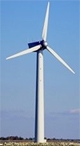
 Researchers at MIT have found a way to get wind turbines out of shallow water. Currently wind turbines in the ocean can only handle a depth of about 15 meters or less. Which means that people living on the shore have their view obstructed by them. This new wind turbine structure from MIT will allow turbines to be located far away from shore.
Paul D. Sclavounos, a professor of mechanical engineering and naval architecture, has spent decades designing and analyzing large floating structures for deep-sea oil and gas exploration. Observing the wind-farm controversies, he thought, “Wait a minute. Why can’t we simply take those windmills and put them on floaters and move them farther offshore, where there’s plenty of space and lots of wind?”
In 2004, he and his MIT colleagues teamed up with wind-turbine experts from the National Renewable Energy Laboratory (NREL) to integrate a wind turbine with a floater. Their design calls for a tension leg platform (TLP), a system in which long steel cables, or “tethers,” connect the corners of the platform to a concrete-block or other mooring system on the ocean floor. The platform and turbine are thus supported not by an expensive tower but by buoyancy. “And you don’t pay anything to be buoyant,” said Sclavounos.
According to their analyses, the floater-mounted turbines could work in water depths ranging from 30 to 200 meters. In the Northeast, for example, they could be 50 to 150 kilometers from shore. And the turbine atop each platform could be big–an economic advantage in the wind-farm business. The MIT-NREL design assumes a 5.0 megawatt (MW) experimental turbine now being developed by industry. (Onshore units are 1.5 MW, conventional offshore units, 3.6 MW.)
The tethers allow the floating platforms to move from side to side but not up and down–a remarkably stable arrangement. According to computer simulations, in hurricane conditions the floating platforms–each about 30 meters in diameter–would shift by one to two meters, and the bottom of the turbine blades would remain well above the peak of even the highest wave. The researchers are hoping to reduce the sideways motion still further by installing specially designed dampers similar to those used to steady the sway of skyscrapers during high winds and earthquakes.
 This is big news! Maybe this will have the same impact that suing tobacco companies had. The state charges that car companies have damaged people’s health because of the emissions of their products.
 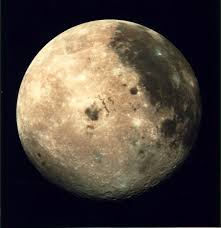 David McKa, a (rocket?) scientist, is arguing that the Moon can be used as the best time capsule and a digital store hose for human history. Essentially it would be modern day Library of Alexandria – but this won’t burn down.