Motorola has invested in a micro-fuel cell developer called Tekion. Banking on their ability to produce a fuel cell to power portable devices such as laptops, cell phones and music players, Motorola has taken a big step towards reducing the amount of batteries that hit landfills (and thus the water cycle) everyday.
Category Archives: Technology
Faster, Better HIV Tests
Physicians in Canada are now able to purchase a 60-second HIV testing machine. Previously, individuals wanting to be tested for the disease had to wait 2-3 weeks to get the results from provincial laboratories. Now, it’s as simple as a trip to the doctor’s office.
Meanwhile, the US FDA is considering approving a do-it-yourself home HIV test. This is good to hear, because 1 in 4 AIDS patients in the US don’t know they have it!
$53 Million for Solar Power from DARPA
 Slashdot has a need post on DARPA’s (Defense Advanced Research Projects Agency ) new project for solar power. The goal is to create solar cells that operate at about 54 percent efficiency in the laboratory and 50 percent in production
The discussion thread over there is not bad either.
Thanks, Benny
Fake Tornadoes as an Energy Source
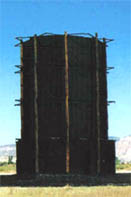 A Canadian engineer has proposed to use tornadoes to power wind turbines that in turn will create electricity. The concept is similar to a solar tower, which uses solar heat to produce wind power. Efficiency of a solar tower relies on how big it is, the bigger the better. The tornado-based power plant does not need to be extremely tall, thus saving costs.
The tornado itself is self-sustaining once it is put into motion since it relies on heat transfer. Located at the bottom of the tornado generator turbines would be located to harness the power of nature. So far a mockup has been made, but a full scale test has yet to happen.
Zero-Energy Homes Become Practical for Rich
Previously shunned by the vast majority of people in the developed world, zero-energy housing is gaining in popularity. California (of course) is on the forefront of this trend. Newsweek has more to say about lowering the energy cost in new houses.
“Aside from the bright patch of solar modules on the roof, Premier Gardens looks like a community of conventional homes. But inside, it’s clear why they save energy.”
The zero-energy home is also making headway in Canada has a housing developer recently announced a new green development in the Toronto area.