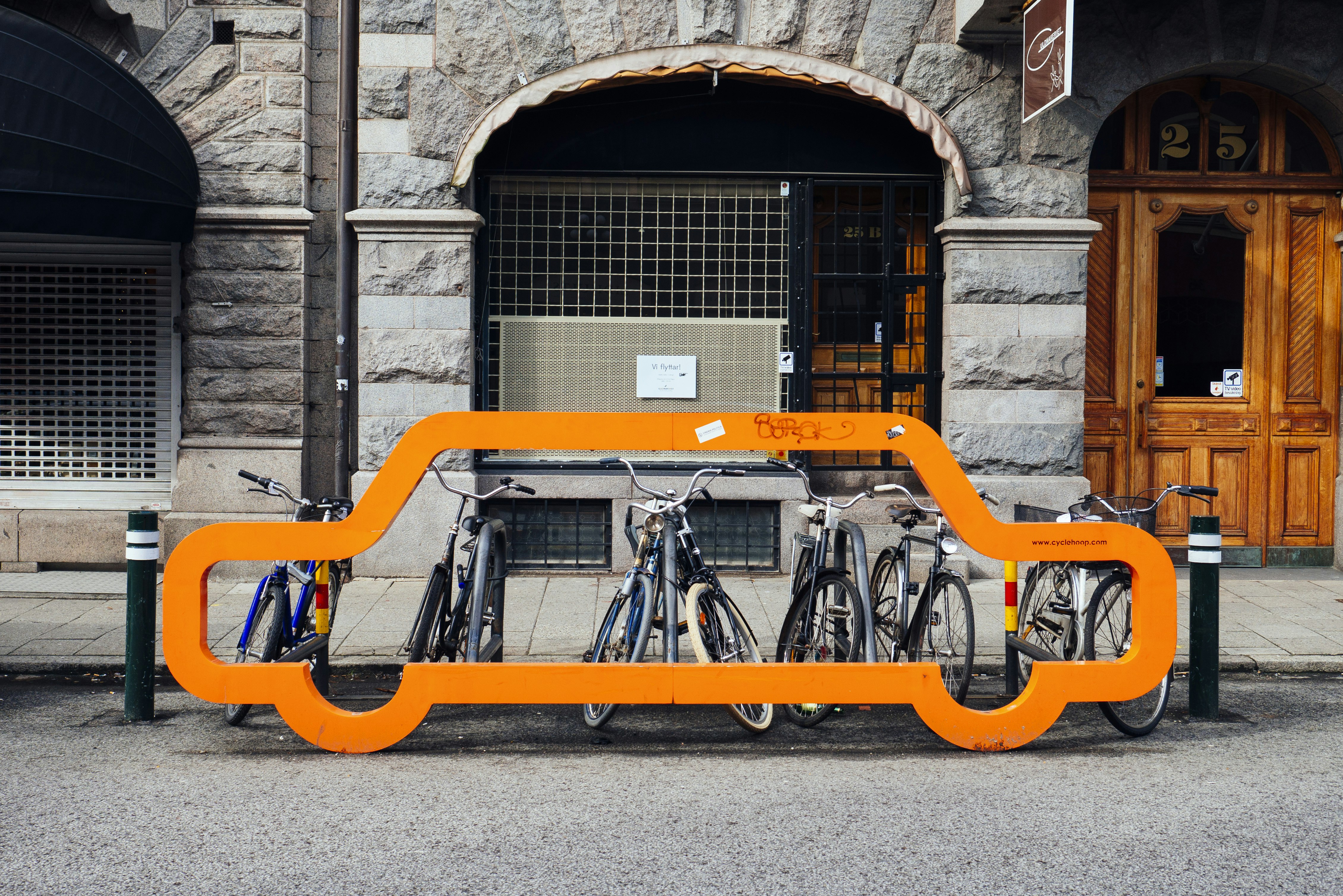
Bicycling is the Safest Form of Transportation

In Toronto, the car rules the road so much so that the city is fine with non-driver (that’s everyone) deaths, and the city won’t do much to stop drivers from killing. Sadly, Toronto isn’t a unique case. In far too many places bicycling infrastructure is an afterthought that plays second fiddle to cars. Despite this lack of support for safety, riding a bike is still the least dangerous way to get around.

Bicycling is so safe that you can actually lengthen your lifetime by riding! Mr Money Moustache ran the numbers and found out that statistically no matter where you live you’ll live longer by riding a bike! So get out there and get on a bike and remember the more people out there commuting via bicycle the safer the streets!

Riding a bike is not more dangerous than driving a car. In fact, it is much, much safer:

Under even the most pessimistic of assumptions:

  • Net effect of driving a car at 65mph for one hour: Dying 20 minutes sooner. (18 seconds of life lost per mile)
  • Net effect of riding a bike at 12mph for one hour: Living 2 hours and 36 minutes longer (about 13 minutes of life gained per mile)

Read more.

Walkable Streets Solve Nearly Every Problem


Anybody who lives in a city knows that walkability of neighbourhoods is a key reason they live where they do. The attraction to mobility options, safe places, cultural and economic diversity is what keeps cities growing. Walkable spaces makes all of that happen and more!

What smoking was to the 20th century car driving is to the 21st, and people are starting to realize we need to kick the car addiction. Car culture kills people through increased obesity, awful urban planning, and pollution (not to mention collisions). Over at Fast Co. Exist they put together a list of 50 reasons why everyone should want more walkable streets.

“The benefits of walkability are all interconnected,” says James Francisco, an urban designer and planner at Arup, the global engineering firm that created the report. “Maybe you want your local business to be enhanced by more foot traffic. But by having that benefit, other benefits are integrated. Not only do you get the economic vitality, but you get the social benefits—so people are out and having conversations and connecting—and then you get the health benefits.” A single intervention can also lead to environmental and political benefits.

Here’s numbers 25 & 26 from the list:

25. It shrinks the cost of traffic congestion
The more people walk and the fewer people are stuck in traffic on roads, the more that benefits the economy. In the Bay Area, for example, businesses lose $2 billion a year because employees are stuck in gridlock.

26. It saves money on construction and maintenance
While building and maintaining roads is expensive—the U.S. needs an estimated $3.6 trillion by 2020 to repair existing infrastructure—sidewalks are more affordable. Investing in sidewalks also brings health and air quality benefits worth twice as much as the cost of construction.

Read all 50.

Activists in SF Try to Get Drivers to Obey the Law

This year in Toronto drivers have been murdering non-drivers at a record rate. Of course, collisions causing casualties are all avoidable – drivers should watch where they are going and infrastructure designed for car drivers makes roads dangerous for everybody. Toronto isn’t unique for its number of driver caused fatalities in North America.

In San Fransico local activists got so sick of car drivers not obeying laws they took matters into their own hands. They setup simple barricades, just pylons, on bike lanes so drivers would know not to drive in them. It worked, drivers didn’t plow through the pylons to drive where they shouldn’t!

The cones, inspired by groups in New York City and elsewhere that have tested similar temporary interventions, are meant to point out that bike lanes really need to be separated to be safe.

“It’s not that we want the police to write tickets for people driving down bike lanes,” he says. “We want it so people can’t possibly drive down bike lanes, or can’t possibly zoom around corners and cut off pedestrians—because it’s physically impossible. I want the city to take it much more seriously.”

Read more.

Cities Designed for Walking Attract Smart People

The human population of the world is urbanizing, but some places are performing better than others. The key to making a good modern and productive city is to make it walkable. Design for people, not cars.

Over at BBC autos they took a look at what attracts smart people to the smartest cities and it looks like walkability is a driving factor.

For example, the top three cities in the study with the highest percentages of office, retail, and residential spots in walkable areas — New York, Washington, and Boston — had a lot of citizens age 25 and up who hold a least a bachelor’s degree. Washington had the most of those citizens in the entire study (51%), and Boston had third most (42%).

Big cities that topped the study’s list in GDP and education level have long been absent of the hallmarks of car-centric suburbia, like freeways and strip malls.

Read more.

Drivers Need to Learn to Share

Bicycles are an amazingly fast way to get around cities and countries, as a cyclist I often roll past cars idling in bumper to bumper traffic. The cars (and their single occupants) aren’t getting anywhere anytime soon yet drivers as a group demand more and more infrastructure when really they should learn to share.

In the Globe and Mail, it’s argued that drivers shouldn’t be so selfish and support things like public transit, bike lanes, and other initiatives that actually help people get around. The car as an individual transportation solution needs to go away.

The truth is there’s no immediate solution to traffic congestion. We can wait for trillion-dollar infrastructure projects to get completed. We can wait for a new subway line or bike lane. We can wait for autonomous cars to make better use of the available road space. But until then, we’re going to have to learn to better share the space we’ve got.

Roads are for moving cars as quickly as possible. Pedestrians are a danger and cyclists are barely tolerated. But what if, as drivers, we changed the way we thought about roads? If they’re public space – a quarter of Toronto’s total area – then shouldn’t they be for moving as many people as fast as possible? Sometimes that will mean prioritizing automobiles. Sometimes that will mean giving up a lane to cyclists. Sometimes that will mean giving up a lane to buses.

Read more.

Scroll To Top