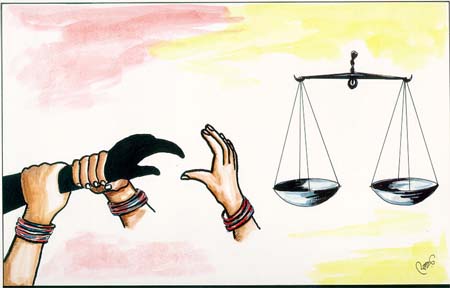
Banking for Beggars

How do you break the vicious cycle of poverty?


The Grameen Bank in India is doing it by issuing microcredit loans to poor people who can then use the money to engage in entrepreneurial activities, like lime-making, garment sewing, and transport services. As of July 2004, the bank had 1267 branches and 3.7 million borrowers, 96 percent of whom were women. 94 percent of the bank is owned by borrowers. In late 2003, the bank established a new lending program specifically for beggars in Bangladesh.

Overall, the initiative has been wildly successful.

And there’s a US division too!

Evo likes Teachers

Five days after being elected Bolivian president, Evo Morales announced he would be reducing his salary by more than half in order to allot money towards hiring more school teachers.

This is part of his campaign to rid the government of corruption. He also aims to improve the living standards of all Bolivians, this is definitely going to improve literacy in the country!

Thanks, Greg!

Camp Sizanani

Camp Sizanani

Camp Sizanani is a special place. Located near Johannesburg, South Africa, Sizanani provides children affected with HIV/AIDS a place to escape, to grow, and most importantly, to be kids. Sizanani offers campers the opportunity to swim, dance, test their creativity in Arts & Crafts, and play a variety of sports. The camp also hosts a unique program that teaches campers a variety of life skills, such as nutrition, hygiene, healthy sexuality, and HIV/AIDS awareness and prevention.

Sizanani is a Zulu word meaning “help each other.” The camp is part of a non-profit corporation called World Camps, which aims to “provide a camp experience for children affected by HIV/AIDS in developing countries and to change prevailing attitudes and behaviors towards AIDS.” Sizanani is one of several initiatives planned by World Camps.

Boys and girls attend Camp Sizanani for separate ten day sessions. There are six sessions held each year. Typically, the camp can accomodate 110 children (ranging in age from 10-15 years old). It draws many of its campers from Soweto, and is staffed both by local folks and international volunteers.

Bolivia’s new Presdient Promises Reform

Bolivia’s first indigenous president, Evo Morales, has announced that he aims to reform the way that the government deals with the indigenous population.

“From 500 years of resistance we pass to another 500 years in power. We’re going to put an end to injustice, to inequality.” Morales said.

According to CBC.ca “Tens of thousands of Bolivians – led by Indians in traditional garb – gathered in a square outside the legislature, cheering and chanting “Evo, Evo.””

Thanks, Justin!

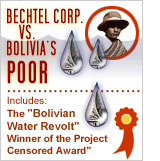
Bolivia vs. Bechtel

BechtelJim Shultz, from The Democracy Center brought good news today.

“This morning, the Bechtel Corporation will sign an agreement dropping its $50 million legal case against the people of Cochabamba (Bolivia) for kicking Bechtel out in the 2000 water revolt” said Shultz. “Instead of the fortune it demanded, Bechtel will fly home with a token settlement of two shiny Bolivian coins worth a total of thirty cents. One of the biggest, most powerful corporations on Earth has been defeated by an army of concerned citizens all over the world.”

Good for the people of Bolivia!!

For more information on this, check out democracyctr.org and boliviasoberana.org (in Spanish). For more information on privatization of water around the world, go to waternotforsale.org