
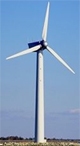
“Invisible” Wind Turbines

Good form of power- windResearchers at MIT have found a way to get wind turbines out of shallow water. Currently wind turbines in the ocean can only handle a depth of about 15 meters or less. Which means that people living on the shore have their view obstructed by them. This new wind turbine structure from MIT will allow turbines to be located far away from shore.

Paul D. Sclavounos, a professor of mechanical engineering and naval architecture, has spent decades designing and analyzing large floating structures for deep-sea oil and gas exploration. Observing the wind-farm controversies, he thought, “Wait a minute. Why can’t we simply take those windmills and put them on floaters and move them farther offshore, where there’s plenty of space and lots of wind?”

In 2004, he and his MIT colleagues teamed up with wind-turbine experts from the National Renewable Energy Laboratory (NREL) to integrate a wind turbine with a floater. Their design calls for a tension leg platform (TLP), a system in which long steel cables, or “tethers,” connect the corners of the platform to a concrete-block or other mooring system on the ocean floor. The platform and turbine are thus supported not by an expensive tower but by buoyancy. “And you don’t pay anything to be buoyant,” said Sclavounos.

According to their analyses, the floater-mounted turbines could work in water depths ranging from 30 to 200 meters. In the Northeast, for example, they could be 50 to 150 kilometers from shore. And the turbine atop each platform could be big–an economic advantage in the wind-farm business. The MIT-NREL design assumes a 5.0 megawatt (MW) experimental turbine now being developed by industry. (Onshore units are 1.5 MW, conventional offshore units, 3.6 MW.)

The tethers allow the floating platforms to move from side to side but not up and down–a remarkably stable arrangement. According to computer simulations, in hurricane conditions the floating platforms–each about 30 meters in diameter–would shift by one to two meters, and the bottom of the turbine blades would remain well above the peak of even the highest wave. The researchers are hoping to reduce the sideways motion still further by installing specially designed dampers similar to those used to steady the sway of skyscrapers during high winds and earthquakes.

Dell Commits to Clean Up

ewaste

Ever wondered what happened to the old computers bits and mobile phones you threw out? Each year tons of discarded technology quietly disintegrates in landfills or gets melted down, releasing toxins and chemicals into the environment. After a two year campaign by Greenpeace, several companies have agreed to remove the chemical content of their hardware. These companies include the likes of HP, LGE, Nokia, Samsung, Sony and Sony Ericsson and now Dell has joined this list of environmentally conscious hardware providers.

By removing toxic chemicals, these companies make their hardware easier to recycle and take responsibility for the impact their products have on the environment.

A recent survey showed that most consumers would be prepared to pay more for computers that were chemical free and had no negative impact on the environment. Hopefully, the bigger names missing from the list will pay attention and endeavour to meet the needs of consumers by providing environmentally responsible hardware.

Stockholm Syndrome

from wikipedia The Toronto Star has an article about how Stockholm is dealing with traffic. They are going to vote on permanently implementing a congestion charge like London’s. They performed a pilot test for the charge and people hated the idea, then people saw the benefits of a congestion charge and opinion switched quickly.

The article does a bit of comparing and contrasting with Toronto, but concentrates on the good policies that Stockholm has adopted.

“”We have too many cars and too few roads,” says Soderholm. “We had to do something. Traffic was growing worse and people were getting more and more annoyed. For the Social Democrats, the environment was the primary concern. For the conservatives, it was to make Stockholm more attractive to business.”

The charges were in force from Jan. 3 to July 31. Though there were many exemptions, most drivers had to pay a fee ranging from $2 to $3.50, to a daily maximum of $10, every time they drove in and out of the designated zone. The fee applied Monday to Friday, 6:30 a.m. to 6:30 p.m.
The cost of the trial, about $500 million, was paid for by the national government.
Needless to say, the majority of Stockholmers were adamantly opposed to the fee when the idea was first raised last year.
“Resistance was highest before the program started,” says Gunnar Soderholm, Stockholm’s deputy chief executive officer. “Basically, the Green Party forced the ruling Social Democrats to support the congestion zone. A lot of Social Democrats thought it was political suicide. The media had also been strongly opposed to it, but switched immediately. People could see with their own eyes what the benefits were — better traffic and environmental conditions.”

‘Living Planet’ at BCE Place

oorh0913.gifThis month at BCE Place in Toronto there is an exhibition of Roger Hooper’s photographs called “Living Planet”. Roger Hooper, founder and owner of Hoopers Gallery in London, England, is a dedicated wildlife photographer and supporter of World Wildlife  Fund.  The images feature threatened environments from around the globe, including the Arctic, Africa and India. All profits from sales will be donated to support WWF-Canada’s work. The exhibition runs from September 12-29th, so if you’re looking for something to do on a rainy day this month in Toronto check it out and help out a great cause!

More Distributed Goodness

As I sit typing this post, I’m listening to the Tragically Hip, downloading a 24 lecture series on Science to my iPod and I just listened to an inspiring speech by William McDonough (I highly recommend him as THE resource for environmental design). So I cant help but think of all the positive changes computers have brought around.

To add one more to the list check out climateprediction.net. Its a distributed software that uses idle computing capacity to predict the climate in the 21st centuary.