Japanese May Make Better Biodiesel

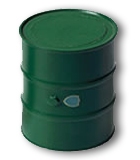
oilJapanese researchers have found a more efficient way to produce biodiesel by using common place sugars. The sugars used are cheaper to purchase and do just as good a job of turning fatty acids into a badly-needed liquid as the currently used chemicals.

Cheaper production of biodiesel could lead to a greater adoption of the fuel since it takes little (or nothing) to make diesel cars run on the fuel. About 40% of cars in Europe consume diesel, with the market in the United States of America expected to grow as a result of rising gas prices.

Solar in the SoCal

Wired has a really good article on a new solar power initiatives in California.
a good source of energy
From the article:

“There is a possibility with this project that solar energy could go commercial in a big way for the first time,” said Alexander. “It’s playing in the big leagues.”

Instead of using panels of photovoltaic cells — solar power’s mainstay technology for decades — Stirling Energy Systems uses 40-foot-tall curved dishes that focus the sun’s energy onto Stirling engines

Chavez Helps America’s poor

VenezuelaMassachusetts officials have worked out a deal with Venezuela that will provide cheap oil for the state’s poor. Hugo Chavez previously offered cheaper oil to poor Americans and Massachusetts is the first state to work out an official program to accommodate Chavez’s offer. The oil is to be sold at 40% below the market rate, the oil is also to be used for heating (not gas for cars).

The Bush administration despises the democratically elected Hugo Chavez, but a Massachusetts congressman said that the cheap oil agreement is “an expression of humanitarianism at its very best”. Talks are currently underway to provide poor people in the Bronx with a similar deal.

Frog Power

The frog from Bullfrog power, which I am quickly assured has no praticular relevance to renewable energy, has quite a lot to boast about nowadays becoming the first 100% green electricity retailer in Ontario. Electricity consumers, including 100 businesses and homeowners that have already switched, pay a higher rate of 8.3 cents per KWH (Ontario rates are 5.0 cents per KWH) on their electricity to ensure their electricity comes from EcoLogo Certified energy sources. Monies collected go towards fostering increased renewable energy development in Ontario such as small hydro, wind, landfill gas, biomass and solar, minimizing green house gas emmissions from coal fired generation.

Other parts of Canada and many other countries already have green power purchase programs in place. To name a short list: Scottland, France, Australia, British Columbia (Canada) and Europe. Programs such as Power to Change contributing to forest creation and stewardship to eliminate all green house gas emmissions resultant from human activites.

Small Windmills, Big Power

Good form of power- windWireless technology has made small remotely-placed electronics more practical, but there was always a problem of how to power the electronics.

An inventor has found a way to make small windmills practical by using piezoelectric crystals. The crystals, when bent, produce a small electric current with more than enough power for a small device.

The breeze moves the fan which, in turn, compresses the crystals which, under pressure, release an electric current, then the power can be used for whatever.