Category Archives: Body & Mind

Walkable Streets Solve Nearly Every Problem


Anybody who lives in a city knows that walkability of neighbourhoods is a key reason they live where they do. The attraction to mobility options, safe places, cultural and economic diversity is what keeps cities growing. Walkable spaces makes all of that happen and more!

What smoking was to the 20th century car driving is to the 21st, and people are starting to realize we need to kick the car addiction. Car culture kills people through increased obesity, awful urban planning, and pollution (not to mention collisions). Over at Fast Co. Exist they put together a list of 50 reasons why everyone should want more walkable streets.

“The benefits of walkability are all interconnected,” says James Francisco, an urban designer and planner at Arup, the global engineering firm that created the report. “Maybe you want your local business to be enhanced by more foot traffic. But by having that benefit, other benefits are integrated. Not only do you get the economic vitality, but you get the social benefits—so people are out and having conversations and connecting—and then you get the health benefits.” A single intervention can also lead to environmental and political benefits.

Here’s numbers 25 & 26 from the list:

25. It shrinks the cost of traffic congestion
The more people walk and the fewer people are stuck in traffic on roads, the more that benefits the economy. In the Bay Area, for example, businesses lose $2 billion a year because employees are stuck in gridlock.

26. It saves money on construction and maintenance
While building and maintaining roads is expensive—the U.S. needs an estimated $3.6 trillion by 2020 to repair existing infrastructure—sidewalks are more affordable. Investing in sidewalks also brings health and air quality benefits worth twice as much as the cost of construction.

Read all 50.

After Conflict, Reach Out and Touch Them


An interesting new study has shown that male athletes touch each other more than female athletes after a sporting conflict. It also turns out that the male athletes demonstrate better “making up” skills – and it all comes down to touching each other. The researchers suspect that this could be some hardwired behaviour since chimps do the same thing – after a conflict they physically touch more in an almost consoling way. The researchers also point out that this behaviour in sport might be way males tend to dominate in certain social practices. Could the act of making supportive physical contact after a confrontation help people get along?

Researchers have long been puzzled by the abilities of male chimpanzees, who constantly bicker and fight, to put aside their differences and co-operate and work together in struggles for territory with other groups.
Studies showed that male and female chimps acted differently in the aftermath of fights, with males much more inclined to engage in reconciliation behaviours.
Psychologists wondered if the same habits were true for humans – and decided to analyse high-level, same sex sporting competitions for these reconciliation traits.

But across the four sports observed, men spent significantly more time touching than females, in what the authors term “post-conflict affiliation”.
“What you’ll see is that many times females brush their fingers against each other,” said lead author Prof Joyce Benenson from Emmanuel College and Harvard University.

Read more.

Kindness Spreads Like a Disease

When we think of contagious things it usually in a negative context like a flu or other illness. The next time you here of something being contagious you can now have a positive association because kindness is contagious too.

New research is discovering that individuals who are around generous people can “catch” that attitude and become more kind themselves. It’s really inspiring research!

People in our studies didn’t even need to see others do anything in order to catch their kindness. In another follow-up, people read stories about the suffering of homeless individuals. After each story, they saw what they believed was the average level of empathy past participants had felt in response to its protagonist. Some people learned that their peers cared a great deal, and others learned they were pretty callous. At the end of the study, we gave participants a $1 bonus, and the opportunity to donate as much of it as they liked to a local homeless shelter. People who believed others had felt empathy for the homeless cared more themselves, and also donated twice as much as people who believed others had felt little empathy.
We still don’t fully understand the psychological forces that power kindness contagion. One possibility, supported by our own work, is that people value being on the same page with others. For instance, we’ve found that when individuals learn that their own opinions match those of a group, they engage brain regions associated with the experience of reward, and that this brain activity tracks their later efforts to line up with a group. As such, when people learn that others act kindly, they might come to value kindness more themselves.

Read more.
Thanks to Delaney!

Good Storytellers Tend to be Happier


Everybody likes a good story, but not everybody can tell a story well. If you are one of those people who are a good storyteller you might just be happier than other people. It turns out that good storytellers are happier and that male storytellers who can spin a good yarn are more attractive to females. Practice makes perfect so try telling stories to everybody!

It feels wonderful to tell someone your stories when you are first becoming intimate. Think of the people you have been in love with in your life. I bet that at least once early in your relationship you stayed up all night talking, telling stories that were revealing and illuminating. That deep communication is sexy.

Stories are profoundly intimate, says Kari Winter, a historian and literary critic at the University at Buffalo. “It is empowering to the teller because they get recognition from the listener. And it is empowering to the listener because it helps them understand the teller.”

Read more.

Craft Beer is Advancing Science

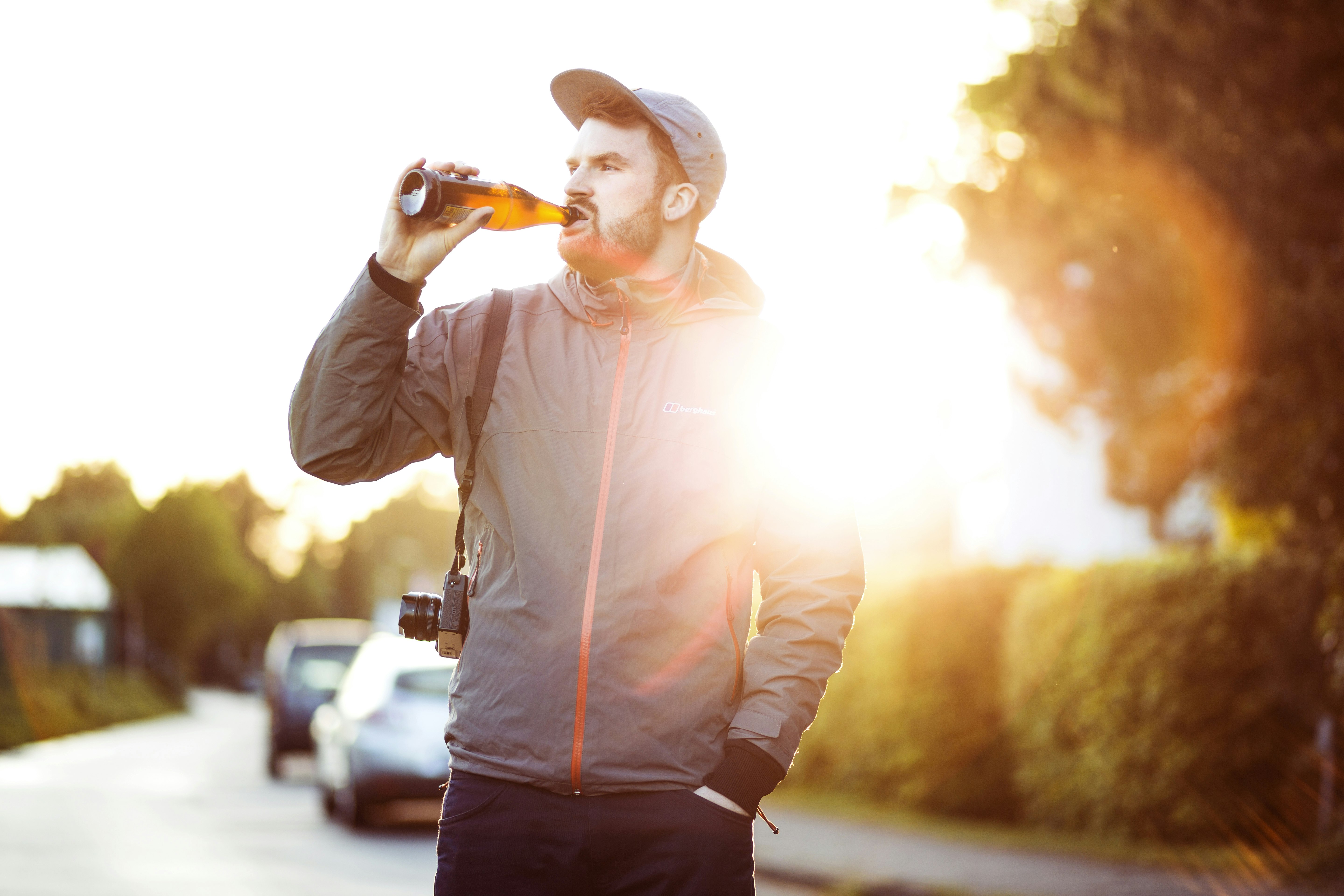
We all know that craft beers are delicious thanks to all their fun flavours and now we also know that by drinking craft beer we are helping the world of science. The search for hop plants, which are integral to craft beer, has pushed science to go further into examining the plant and it’s neighbours – that means the world of botany is expanding. The drive for more varieties of hops has even led to using old ideas in new ways around what medicinal practices hops can be used for!

Flavor is driving the hunt. But, as it turns out, Matthews himself is not only, or even mostly, interested in flavor. The scientific byways, and possible medical uses, are more intriguing to him: the hipster I.P.A. quaffers are, in effect, advancing the frontiers of pure science, enabling the sequencing of the hop genome, and funding ethnobotanical excursions. “I was just in Tbilisi, at the Georgian botanical garden,” Matthews said. “People in Georgia are still into agroforestry—they pick wild strawberries and things in the forest. It turns out rural Georgians have for a long time used wild hops to cure their breads. Hops makes a powerful broad-spectrum antibiotic. It stops bacteria from souring the bread.”

The Georgians have also used hops as a folk medicine for reproductive health, to treat uterine pain, for example. This makes sense to Matthews since hops contain the strongest known plant-derived estrogen. “We are seeking to engineer it,” he said. “We think it can be used for hormone-replacement therapy—for example, in postmenopausal women.”

Read more.