Golden (Gate) Power

In the USA municipalities are doing exactly what the Bush administration despises – trying to use sustainable energy. San Francisco is one such city that is trying to be kind to the environment and they have a really cool idea of using tidal power under the Golden Gate Bridge.

They are investing $150,000 in a feasibility study to use tidal waves to power upwards of 40,000 homes! Officials note the obvious connection between current energy use and climate change and proclaim this project to be a needed step in the development of their city.

“Ultimately, city officials hope that turbines below the bridge will capture tidal energy from the powerful flow that circulates in and out of the mouth of the bay and generate as much as 38 megawatts of power, or enough to power 38,000 homes.

The tides at the Golden Gate offer one of the best locations on the western coast of North America to generate that power, according to a study released this summer by the Electric Power Research Institute and backed by the city’s public utilities agency.”

“Invisible” Wind Turbines

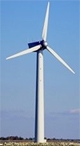
Good form of power- windResearchers at MIT have found a way to get wind turbines out of shallow water. Currently wind turbines in the ocean can only handle a depth of about 15 meters or less. Which means that people living on the shore have their view obstructed by them. This new wind turbine structure from MIT will allow turbines to be located far away from shore.

Paul D. Sclavounos, a professor of mechanical engineering and naval architecture, has spent decades designing and analyzing large floating structures for deep-sea oil and gas exploration. Observing the wind-farm controversies, he thought, “Wait a minute. Why can’t we simply take those windmills and put them on floaters and move them farther offshore, where there’s plenty of space and lots of wind?”

In 2004, he and his MIT colleagues teamed up with wind-turbine experts from the National Renewable Energy Laboratory (NREL) to integrate a wind turbine with a floater. Their design calls for a tension leg platform (TLP), a system in which long steel cables, or “tethers,” connect the corners of the platform to a concrete-block or other mooring system on the ocean floor. The platform and turbine are thus supported not by an expensive tower but by buoyancy. “And you don’t pay anything to be buoyant,” said Sclavounos.

According to their analyses, the floater-mounted turbines could work in water depths ranging from 30 to 200 meters. In the Northeast, for example, they could be 50 to 150 kilometers from shore. And the turbine atop each platform could be big–an economic advantage in the wind-farm business. The MIT-NREL design assumes a 5.0 megawatt (MW) experimental turbine now being developed by industry. (Onshore units are 1.5 MW, conventional offshore units, 3.6 MW.)

The tethers allow the floating platforms to move from side to side but not up and down–a remarkably stable arrangement. According to computer simulations, in hurricane conditions the floating platforms–each about 30 meters in diameter–would shift by one to two meters, and the bottom of the turbine blades would remain well above the peak of even the highest wave. The researchers are hoping to reduce the sideways motion still further by installing specially designed dampers similar to those used to steady the sway of skyscrapers during high winds and earthquakes.

Across the Atlantic With no Sail or Gas

boatThe Transatlantic21 is going to cross the ocean with no gas, instead it will use only solar power! After a successful voyage they will sell solar powered boats based on the successful design.

“The time is ripe for a breakthrough of solar techniques into the world of boat and ship navigation. Demonstrating the potential of solar power is the objective of Transatlantic21. In September 2006, “SUN21″, which has been constructed specifically for this purpose, will begin its journey from Basel to New York. It will be the first solar boat ever to cross the Atlantic: entirely dependent on sunlight, not consuming one drop of gasoline.”

Previously on ThingsAreGood we covered solar powered boats, hybrid boats, and a thing called the skysail.

For-Profit Charity

googleGoogle.org has been briefly mentioned here before, but now the New York Times provides more information on the organization. The NYTimes requires registration at their site, but you can use BugMeNot to get around that.

Google.org is for-profit and this provides some pros and cons. They will have more freedom with how to spend their money and can invest where it would like to. The example the NYTimes gives is that Google.org can invest in an electric car company to help the environment, as opposed to just planting more trees. They promise that any profits made from their investments will not go to their parent search company – all profits will be for Google.org.

“The company has said it plans to spend the money over the next 20 years, and the Google board recently approved a more rapid disbursement rate, $175 million over the next two years.

“Poor people can’t wait,” Dr. Brilliant said. “Dying people can’t wait for some 20-year plan. It’s not what we’re doing here.”

Ventures that grow out of Google.org could be seen to have a competitive edge because they do not need to show a financial profit. But financial returns from a project like the high-mileage car are not necessarily the aim.

“I think how you count profit is the issue here,” said Peter Hero, president of the Community Foundation of Silicon Valley, a charitable foundation with about $1 billion in assets. “Google.org is measuring return on cleaner air and quality of life. Their bottom line isn’t just financial. It’s environmental and social.””

Kids get to interview UN officals

A group of young journalists will get the opportunity to ask UN officials tough questions. The kids will also have the chance to express what it is like to be a child around the world to the delegates to policy makers. I hope that the UN listens.

“The 11 young journalists, from all 4 continents, will be making speeches at the Day of the General Discussion on the Rights of the Child and are expected to interview UN committee members and state representatives. Their reports and observations will be sent back to their countries and communities.

The journalists from Canada, Colombia, El Salvador, Ghana, India, Kenya, Norway, Senegal, Sweden and Zimbabwe, will join 22 youth delegates from other agencies at the UN’s Palais Wilson on September 15th.

“I want the Committee members to know just what Children’s Rights means for me, and millions of young persons like me, and I want to take back everything I learn and accurately inform and educate everyone in my country” said 12-year-old Sibonile, from Zimbabwe.”