
China has started a pilot project for sustainable cities in Liaoning Province named the Cradle to Cradle Village.
“The design of the village aspires to draw power from the sun, to maintain materials in closed-loop systems of technical and biological nutrition, and to create an intergenerational community of people productively engaged in restorative commerce. Its goal is to provide a higher quality of life for the villagers and to exemplify a more hopeful future for the children.”
For more information the BBC has a good article looking into sustainability in cities.
 In addition to the obvious life-saving benefits, manufactured meat would allow the manufacture to control how much nutrients are in each slice. For example omega 3, which is a good thing, can replace omega 6, which is not as good for you.
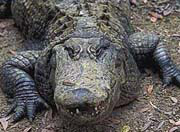 Australian scientists are collecting crocodile blood samples with the hopes of developing a new antimicrobial drug for humans. In recent studies they have found that the reptile’s have incredibly strong immune systems which essentially attach to bacteria, tear them apart and then cause them to explode. In the wild Crocs often fight savagely, sometimes even loosing limbs, so their strong healing potential enables them to recover from many of these injuries quickly without ever develping an infection.